








 Work time
Diagnostics: Mon - Sun, 6:00 - 23:00
Polyclinic: Mon - Sun, 8:00 - 20:00

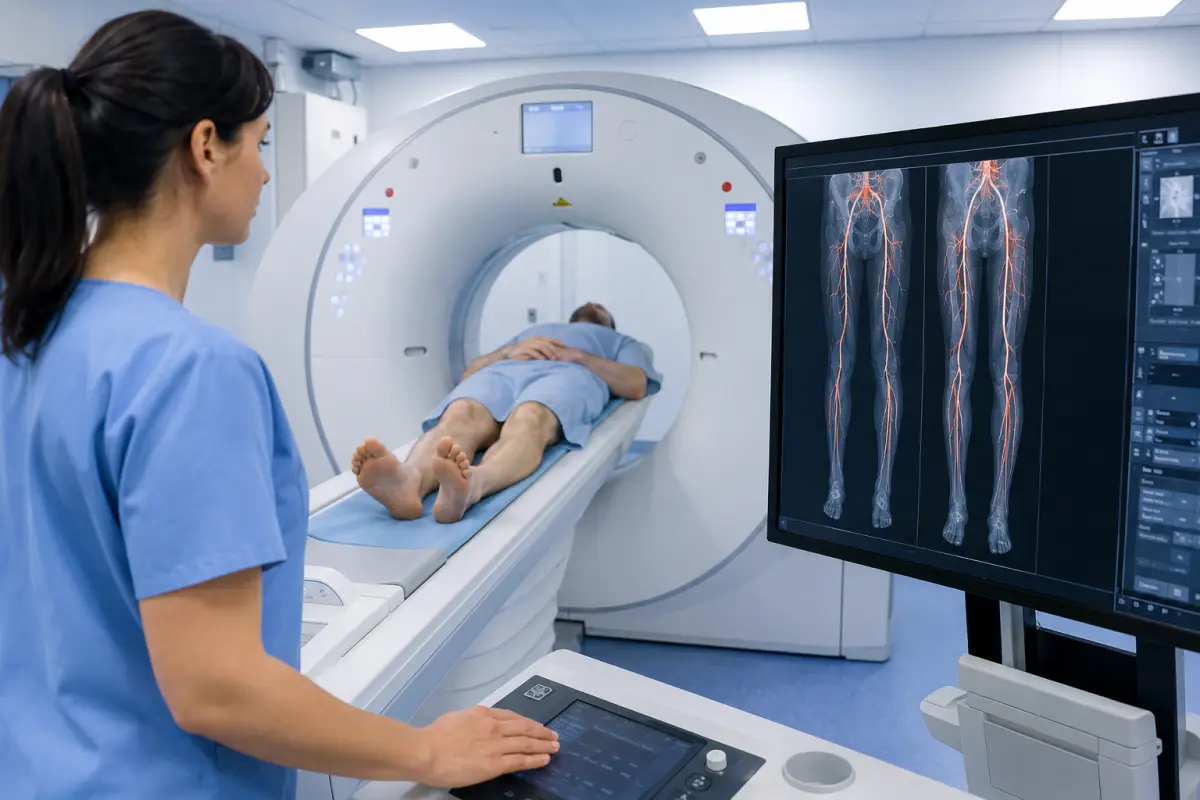
CT angiography of lower limb vessels — is a contrast-enhanced computed tomography examination that allows detailed assessment of the leg arteries, their patency, narrowing, blockage, tissue blood supply, and possible vascular changes. At the HBMedical medical center in Kyiv, you can undergo CT of the leg vessels near Shuliavska metro station at: 3 O. Dovzhenka Street.
The examination is relevant for patients who have leg pain while walking, numbness, cold feet, skin color changes, poor wound healing, suspected atherosclerosis, thrombosis, or impaired arterial blood flow. You can book a CT scan of lower limb vessels online or by phone.
What is CT of lower limb vessels?
CT of lower limb vessels — is an examination of the leg arteries using a computed tomography scanner and intravenous contrast enhancement. The contrast agent passes through the vessels, while the scanner performs layer-by-layer imaging. This allows the doctor to assess how blood flows through the arteries and whether there is narrowing, blockage, impaired patency, or other changes.
At HBMedical, CT angiography of the lower limbs is performed from the renal arteries to the feet inclusive. This is important because a problem with blood supply to the legs may occur not only in the lower leg or thigh, but also higher — at the level of the abdominal aorta, iliac arteries, or femoral arteries.
In simple terms, CT angiography of the leg vessels helps the doctor see the entire arterial «highway» that supplies blood to the lower limbs.
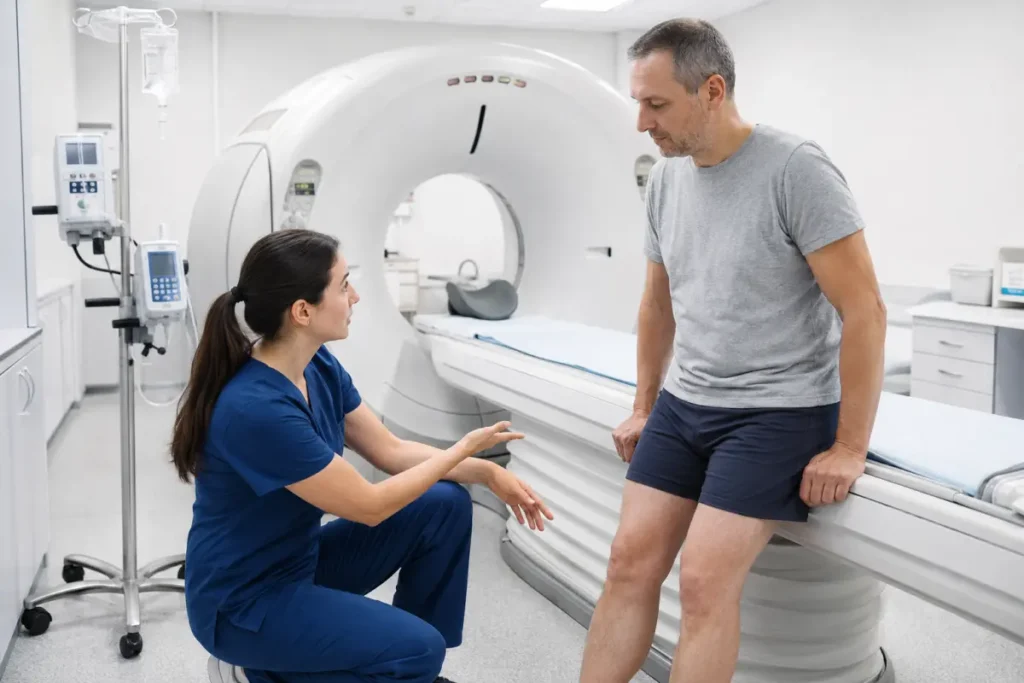
What does CT angiography of the leg vessels show?
CT of lower limb vessels allows assessment of the arteries from the upper level of blood supply to the vessels of the feet. During the examination, the doctor can see:
- arterial narrowing;
- complete or partial vessel blockage;
- atherosclerotic plaques;
- thrombosis or impaired patency;
- aneurysmal vessel dilation;
- anatomical features of the arterial system;
- the level and length of vessel damage;
- the state of blood supply to the thighs, lower legs, and feet;
- changes after vascular surgery or endovascular treatment.
CT angiography of the lower limbs is especially useful when it is necessary not only to confirm a problem, but also to understand exactly where it is located, how severe the narrowing is, and which vascular segment requires the doctor’s attention.
When should CT of lower limb vessels be performed?
CT angiography of the leg vessels is usually prescribed by a vascular surgeon, phlebologist, cardiologist, endocrinologist, general practitioner, or another specialized doctor. Most often, the examination is needed when there are symptoms of impaired arterial circulation in the legs.
You should pay attention to the lower limb vessels if you have the following symptoms:
- pain in the calves, thighs, or feet while walking;
- the need to stop because of leg pain;
- rapid leg fatigue during normal activity;
- a feeling of coldness in the feet;
- numbness, tingling, or weakness in the legs;
- skin color changes on the feet or toes;
- paleness, bluish discoloration, or darkening of skin areas;
- poor healing of wounds, cracks, or ulcers on the legs;
- pain in the foot or lower leg at rest;
- reduced or absent pulsation in the arteries of the foot;
- suspected atherosclerosis of the lower limb arteries;
- suspected thrombosis, occlusion, or vascular stenosis.
CT of the leg vessels may also be prescribed before planning surgery, stenting, angioplasty, bypass surgery, or other vascular treatment. The examination helps the doctor see the exact vascular anatomy and prepare an intervention strategy.
CT of the leg vessels in lower limb atherosclerosis
One of the common reasons for referral for CT angiography of the lower limbs is suspected atherosclerotic arterial disease. In atherosclerosis, plaques form in the vessel walls, gradually narrowing the arterial lumen and worsening tissue blood supply.
At first, the patient may feel only discomfort or fatigue in the legs. Over time, pain while walking, the need to stop, cold feet, and poor wound healing may appear. If blood flow impairment progresses, tissues may lack oxygen even at rest.
CT angiography makes it possible to assess the level at which narrowing is present: in the iliac, femoral, popliteal, tibial arteries, or lower — at the level of the foot. This is important for choosing treatment: medication, endovascular, or surgical.
CT angiography of the lower limbs and vascular ultrasound — what is the difference?
Ultrasound of the lower limb vessels is often used as the first stage of diagnostics because it helps assess blood flow in real time. However, sometimes ultrasound data is not enough: for example, when it is necessary to accurately determine the length of a narrowing, assess vessels over a large area, or prepare for an intervention.
CT of the lower limb vessels provides a detailed anatomical picture of the arteries and allows them to be viewed along their entire length — from the level of the renal arteries to the feet. Therefore, CT angiography is often prescribed after ultrasound when the diagnosis needs to be clarified or treatment planned.
These methods do not always replace each other. Ultrasound assesses blood flow dynamically, while CT angiography provides a detailed image of vascular anatomy. The method that is needed in your case should be determined by a doctor.
Price of CT of lower limb vessels at HBMedical
At HBMedical, the cost of CT angiography of the lower limbs is 6450 UAH.
| Service | Examination scope | Price |
| CT angiography of the lower limbs | From the renal arteries to the feet inclusive | 6450 UAH |
The price depends on the scanning volume, use of contrast agent, and examination protocol. Before booking, the administrator will provide the current cost, explain the preparation, and clarify whether additional documents or tests are required.
How is CT angiography of lower limb vessels performed?
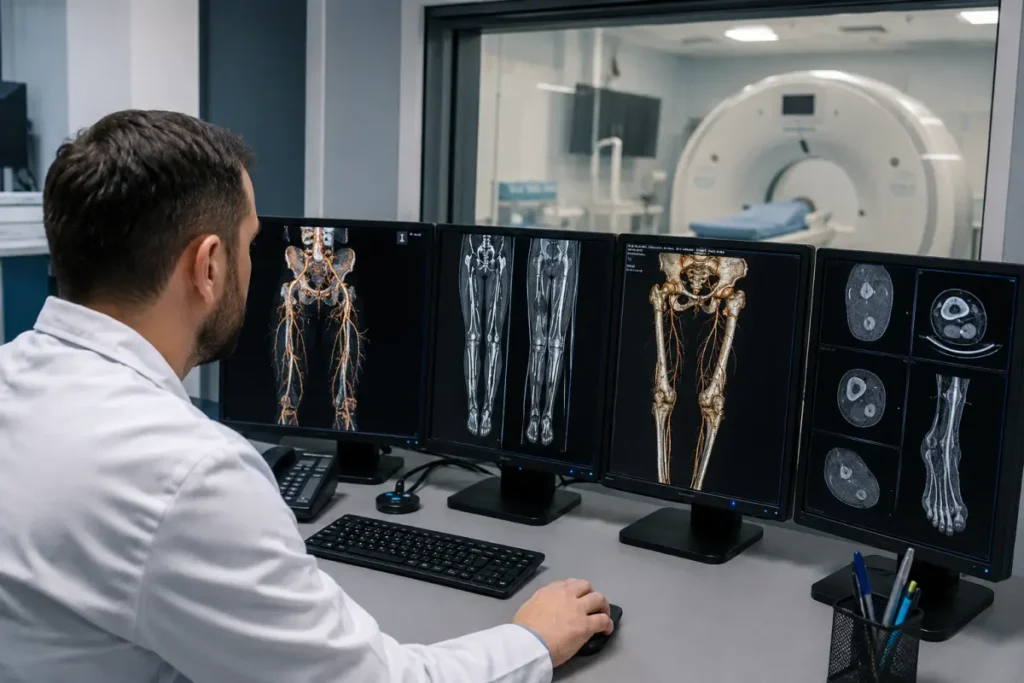
Before the examination, the patient completes registration and provides a doctor’s referral, if available. Medical staff clarify important information: whether there have been allergic reactions to contrast, whether the patient has chronic kidney, thyroid, or heart diseases, diabetes mellitus, and which medications the patient takes regularly.
After preparation, the patient lies on the CT scanner table. A catheter is inserted into a vein, through which the contrast agent is administered. During scanning, the patient must lie still so that the vascular images are clear. The scanner takes a series of images, and after the procedure the radiologist analyzes the obtained data.
During contrast administration, a feeling of warmth in the body or a metallic taste in the mouth may occur. Usually, these sensations are short-term and pass quickly. If pronounced discomfort appears, you should immediately inform the medical staff.
How to prepare for CT of the leg vessels?
Since CT of lower limb vessels is performed with contrast, preparation is important for patient safety and result quality.
Before the procedure, you need to:
- have a doctor’s referral if the examination was prescribed by a specialist;
- take a blood creatinine test to assess kidney function;
- inform staff about allergies to iodine, contrast agents, or medications;
- report diabetes mellitus, kidney, thyroid, or heart diseases;
- inform staff about pregnancy or breastfeeding;
- bring results of previous ultrasound, CT, MRI, discharge summaries, or vascular surgeon consultations;
- check when booking whether you need to arrive fasting.
You should not stop taking your regular medications on your own. If you take medications for diabetes, blood pressure, cardiovascular diseases, or medications that may affect kidney function, be sure to inform the staff before CT with contrast is performed.
Who may be contraindicated for CT angiography of the lower limbs?
CT of the leg vessels is performed using X-ray radiation and iodine-containing contrast, so the examination has certain limitations. The examination may be contraindicated or require additional approval from a doctor in cases of:
- pregnancy;
- severe kidney failure;
- allergy to iodine-containing contrast;
- severe reactions to contrast in the past;
- certain thyroid diseases;
- decompensated chronic conditions;
- inability to lie still during scanning.
If you have concomitant diseases or previous reactions to contrast, it is better to mention this when booking. This will help prepare properly for the procedure and avoid unnecessary risks.
What does the patient receive after CT of lower limb vessels?
After the examination, the radiologist analyzes the images and prepares a report. The results may indicate whether there is narrowing, blockage, impaired patency, atherosclerotic changes, thrombosis, aneurysmal dilation, or other vascular features.
With the completed report, you should contact the doctor who referred you for the examination. Most often, this is a vascular surgeon, phlebologist, cardiologist, endocrinologist, or general practitioner. It is the specialized doctor who compares the CT results with symptoms, test results, and other data, and then determines the further treatment strategy.
Why choose CT of the leg vessels at HBMedical in Shuliavka?
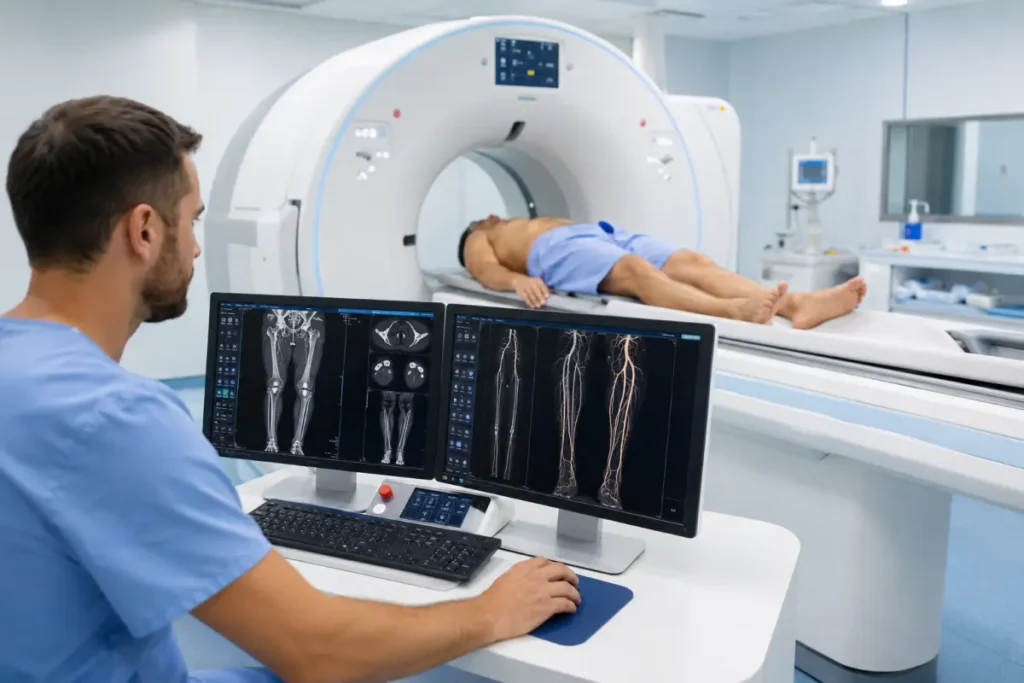
HBMedical — is a modern clinical and diagnostic center in Kyiv where you can undergo CT angiography of the lower limbs in a convenient location near Shuliavska metro station. The center is suitable for patients who need to quickly check leg vessels, clarify a diagnosis, or prepare for a vascular surgeon consultation.
Advantages of HBMedical:
- convenient location in Kyiv near Shuliavska metro station;
- address: 3 O. Dovzhenka Street;
- CT angiography of the lower limbs from the renal arteries to the feet inclusive;
- modern Siemens computed tomography scanner;
- online or phone booking;
- clear price for CT of the leg vessels;
- daily diagnostics;
- report prepared by a radiologist;
- the possibility to undergo additional examinations or consultations in one medical center.
The location in Shuliavka is convenient for patients from Shevchenkivskyi, Solomianskyi, Sviatoshynskyi districts, KPI, Nyvky, Lukianivka, Dorohozhychi, and other areas of Kyiv.
How to book CT of lower limb vessels in Kyiv?
To book CT angiography of lower limb vessels at HBMedical, leave a request on the website or call the medical center. When booking, it is advisable to say that you need CT angiography of the lower limbs specifically, and also clarify whether you have a doctor’s referral.
The administrator will help you choose a convenient time, provide price information, explain the preparation rules for CT with contrast, and tell you which tests or documents you need to bring.
HBMedical — CT of lower limb vessels in Kyiv
Address: Kyiv, 3 O. Dovzhenka Street, Shuliavska metro station
Service: CT angiography of the lower limbs from the renal arteries to the feet inclusive
Price: 6450 UAH
Booking: online or by phone
Frequently asked questions about CT of lower limb vessels
How much does CT of lower limb vessels cost in Kyiv?
At HBMedical, the price of CT angiography of the lower limbs is 6450 UAH. The price includes examination of the vessels from the renal arteries to the feet inclusive. It is better to check the current price when booking.
Where can I get CT of the leg vessels in Shuliavka?
CT of the lower limb vessels can be performed at the HBMedical medical center in Kyiv at: 3 O. Dovzhenka Street, near Shuliavska metro station.
Is contrast required for CT of lower limb vessels?
Yes. CT angiography of the leg vessels is performed with intravenous contrast enhancement because contrast makes it possible to clearly see the arteries and assess their patency.
Which is better: ultrasound of the leg vessels or CT angiography?
Ultrasound is often used as the initial examination, while CT angiography is used when it is necessary to assess vascular anatomy in detail, determine the level of narrowing or blockage, and prepare for treatment. The choice of method depends on symptoms and the doctor’s prescription.
Does CT of the leg vessels show veins?
CT angiography of the lower limbs is usually focused primarily on assessing arteries. If the veins, venous thrombosis, or varicose veins need to be checked, the doctor may recommend another method, most often ultrasound of the lower limb veins.
Is a creatinine test required before CT of the leg vessels?
Yes, before CT with contrast, a blood creatinine test is usually required. It helps assess kidney function before the contrast agent is administered.
Is CT angiography of the lower limbs painful?
The scan is painless. Discomfort may occur only during venous catheter placement or contrast administration. A short-term feeling of warmth in the body is possible and usually passes quickly.
How long does CT of lower limb vessels take?
The scanning itself is quick, but you should allow time for registration, preparation, catheter placement, contrast administration, and instructions. It is better to check the approximate time when booking.
Who is prescribed CT of lower limb vessels?
The examination may be prescribed for leg pain while walking, suspected atherosclerosis, thrombosis, arterial narrowing or blockage, poor wound healing on the feet, preparation for vascular treatment, or follow-up after surgery.
Can CT of the leg vessels be done without a referral?
It is advisable to have a doctor’s referral, as it helps correctly determine the examination area and purpose. If there is no referral, you should consult a specialized doctor or ask during booking which consultation may be needed before diagnostics.





Саме до таких фахівців, в разі необхідності, є бажання повернутися!
























Need specialist help?
Order a callback and our consultant will help you choose a doctor and make an appointment at a convenient time for you!