








 Work time
Diagnostics: Mon - Sun, 6:00 - 23:00
Polyclinic: Mon - Sun, 8:00 - 20:00

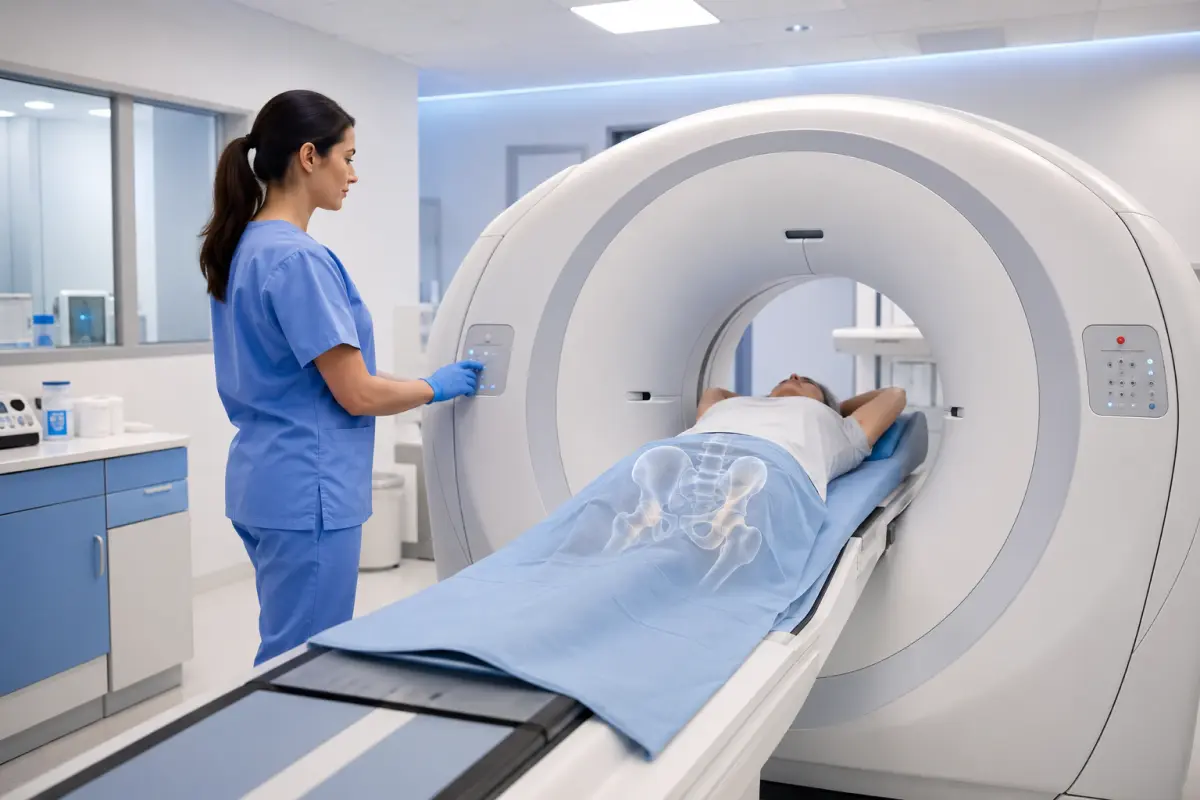
A CT scan of the pelvic organs is a computed tomography examination that helps assess the condition of the bladder, ureters, rectum, lymph nodes, soft tissues of the pelvis, as well as reproductive organs in women and men. At the HBMedical medical center in Kyiv, you can undergo a pelvic CT scan near Shuliavska metro station — with or without contrast, depending on the doctor’s referral and the clinical situation.
The examination is performed on a modern Siemens CT scanner. You can book a CT scan of the pelvic organs online or by phone. The administrator will help you choose a convenient time, confirm the current price, and explain how to prepare for the procedure.
What is a pelvic CT scan?
A pelvic CT scan is a layer-by-layer X-ray scan of the pelvic area followed by computer processing of the images. The method allows the doctor to see internal organs, tissues, blood vessels, lymph nodes, pelvic bone structures, and possible pathological changes.
Computed tomography of the pelvic organs can be performed without contrast or with intravenous contrast enhancement. A non-contrast examination is more often used to assess stones, traumatic changes, major structural abnormalities, or in cases where contrast is contraindicated. CT with contrast provides more information about soft tissues, neoplasms, inflammatory processes, lymph nodes, blood vessels, and the spread of a pathological process.
The choice between pelvic CT with contrast and without contrast should be made by a doctor. It is not advisable to choose the examination format based only on price, because the diagnostic value depends on the protocol.
Which organs are visible on a CT scan of the pelvic organs?
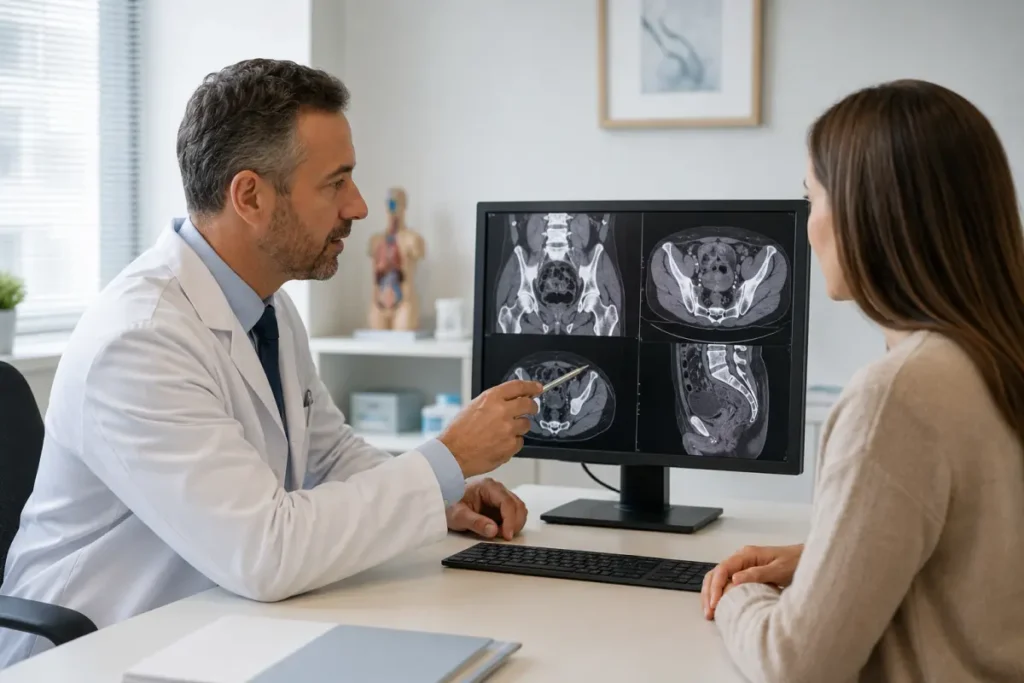
A pelvic CT scan allows assessment of the organs and structures located in the lower abdomen and pelvic cavity. The scope of the examination depends on the protocol, the doctor’s referral, and whether contrast is used.
During CT, the following may be assessed:
- bladder;
- lower parts of the ureters;
- rectum;
- part of the large intestine;
- pelvic lymph nodes;
- soft tissues of the pelvic area;
- pelvic blood vessels;
- uterus, ovaries, and fallopian tubes in women;
- prostate gland and seminal vesicles in men;
- pelvic bones, if they are included in the area of assessment;
- postoperative changes, scars, areas of inflammation, or mass lesions.
If it is necessary to assess not only the pelvis but also the abdominal organs, the doctor may prescribe an extended examination — CT scan of the abdominal cavity and pelvic organs.
What does a CT scan of the pelvic organs show?
Computed tomography of the pelvis helps detect or clarify various pathological changes. The method is especially useful when a detailed image of organs, tissues, and anatomical structures in cross-sectional slices is needed.
A CT scan of the pelvic organs can show:
- inflammatory processes in the pelvic organs;
- abscesses, infiltrates, fluid collections;
- enlarged lymph nodes;
- tumors and mass lesions;
- spread of an oncological process;
- metastatic involvement of lymph nodes;
- stones in the ureters or bladder;
- changes after surgery;
- complications after surgical treatment;
- traumatic injuries of organs and tissues;
- pathological changes of the intestine in the pelvic area;
- indirect signs of impaired blood supply or inflammation.
CT does not replace consultation with a gynecologist, urologist, proctologist, surgeon, or oncologist. It is a diagnostic method that helps the doctor better understand the cause of symptoms and determine further treatment tactics.
When is a pelvic CT scan prescribed?
A CT scan of the pelvic organs may be prescribed for pain, suspected inflammation, injury, tumor process, complications after surgery, or when other diagnostic methods have not provided enough information.
The most common indications for pelvic CT:
- pain in the lower abdomen or pelvic area;
- suspected inflammatory process;
- suspected abscess or fluid collection;
- suspected tumor or mass lesion;
- monitoring of oncological diseases;
- assessment of lymph nodes;
- suspected stones in the lower parts of the ureters or bladder;
- blood in the urine;
- trauma to the abdomen, pelvis, or lower part of the torso;
- preparation for surgery;
- follow-up after surgical treatment;
- clarification of ultrasound, MRI, X-ray, or laboratory test results;
- unexplained weight loss, prolonged fever, and weakness combined with other symptoms.
If the pain is acute, sharp, accompanied by fever, vomiting, bleeding, urinary retention, loss of consciousness, or a sudden deterioration in condition, urgent medical care is needed instead of waiting for a scheduled appointment.
CT scan of the pelvic organs in women
In women, pelvic CT can be used to assess the uterus, ovaries, adnexa, surrounding tissues, lymph nodes, and possible complications of inflammatory or tumor processes. The examination may be prescribed by a gynecologist, oncologist, surgeon, or doctor of another specialty.
A CT scan of the pelvic organs in women may be relevant for:
- lower abdominal pain;
- suspected mass lesion;
- suspected inflammatory process;
- follow-up after surgery;
- assessment of the spread of an oncological process;
- enlarged lymph nodes;
- complications after treatment;
- the need to clarify ultrasound or MRI results.
It is important to understand that ultrasound or MRI is often used for the initial assessment of many gynecological conditions. CT may be needed when the doctor needs to assess a wider anatomical area, lymph nodes, the spread of a process, or the condition of adjacent organs.
CT scan of the pelvic organs in men
In men, pelvic CT can help assess the bladder, lower parts of the ureters, prostate gland, seminal vesicles, rectum, lymph nodes, and surrounding tissues.
The examination may be prescribed for:
- pain in the lower abdomen or pelvic area;
- urination disorders;
- blood in the urine;
- suspected stones in the urinary tract;
- suspected inflammatory or tumor process;
- follow-up after surgery;
- assessment of lymph nodes;
- preparation for treatment or monitoring its effectiveness.
For a detailed assessment of the prostate gland, the doctor may recommend MRI, ultrasound, or laboratory tests. Pelvic CT is more often used when it is necessary to assess not only the prostate but also adjacent organs, lymph nodes, or the spread of a process.
Pelvic CT without contrast
A CT scan of the pelvic organs without contrast is an examination performed without intravenous administration of a contrast agent. This format may be chosen when it is necessary to assess stones, traumatic changes, bone structures, major anatomical abnormalities, or when contrast enhancement is contraindicated for the patient.
CT without contrast may be relevant for:
- suspected stones in the ureters or bladder;
- pelvic trauma;
- inability to use a contrast agent;
- initial assessment of certain conditions based on a doctor’s referral;
- monitoring specific changes over time.
At the same time, non-contrast CT may be less informative for assessing tumors, lymph nodes, inflammation, vascular structures, and soft-tissue changes. Therefore, if the doctor has prescribed CT with contrast, it is better not to replace it with a non-contrast examination without approval.
CT scan of the pelvic organs with contrast
Pelvic CT with contrast is performed with intravenous administration of a contrast agent. Contrast helps better visualize blood vessels, soft tissues, tumor formations, inflammatory changes, lymph nodes, and the boundaries of a pathological process.
CT with contrast is often prescribed when it is necessary to:
- clarify the nature of a neoplasm;
- assess the spread of a tumor process;
- check lymph nodes;
- detect or clarify inflammatory changes;
- assess postoperative complications;
- distinguish scar changes from an active process;
- obtain more information about soft tissues and blood vessels.
Before CT with contrast, you should report allergies to iodine or contrast agents, kidney disease, thyroid disease, diabetes, pregnancy, or breastfeeding. A blood creatinine test is also usually required to assess kidney function.
Pelvic CT or MRI: which is better?
CT and MRI of the pelvis are different diagnostic methods. CT quickly provides detailed information about organs, tissues, bone structures, stones, lymph nodes, injuries, and the extent of certain processes. MRI is better suited for detailed assessment of soft tissues, reproductive organs, pelvic structures, and some gynecological or urological conditions.
It cannot be said that one method is always better than the other. The choice depends on symptoms, preliminary diagnosis, examination purpose, urgency, contraindications, and the question the doctor wants to clarify. In some cases, ultrasound is enough; in others, CT, MRI, or a combination of several methods is required.
Price of CT scan of pelvic organs at HBMedical
In the current HBMedical price list, examination of the pelvic organs is presented as part of the CT scan of the abdominal cavity and pelvic organs service. This is a logical format because pathological processes in the pelvis are often related to the abdominal organs, intestines, urinary system, lymph nodes, or adjacent tissues.
| Service | Without contrast | With contrast |
| CT scan of the abdominal cavity and pelvic organs | UAH 2800 | UAH 5100 |
| CT scan of three areas: chest cavity, abdominal cavity, pelvis | UAH 4300 | UAH 5550 |
The price of the examination includes the doctor’s report and a flash drive. If you specifically need a CT scan of the pelvic organs without the abdominal cavity, confirm the availability of this format during booking. The administrator will compare the doctor’s referral with the current price list and explain which service matches your request.
How is a CT scan of the pelvic organs performed?
The patient arrives at the medical center at the appointed time, completes registration, and provides the doctor’s referral, if available. Before the procedure, the medical staff clarifies complaints, the purpose of the examination, the presence of allergies, chronic diseases, previous reactions to contrast, and test results if contrast enhancement is planned.
During the examination, the patient lies on the moving table of the CT scanner. The table gradually moves through the ring of the device, and the scanner performs a series of layered images. It is important to remain still because movement can reduce image quality.
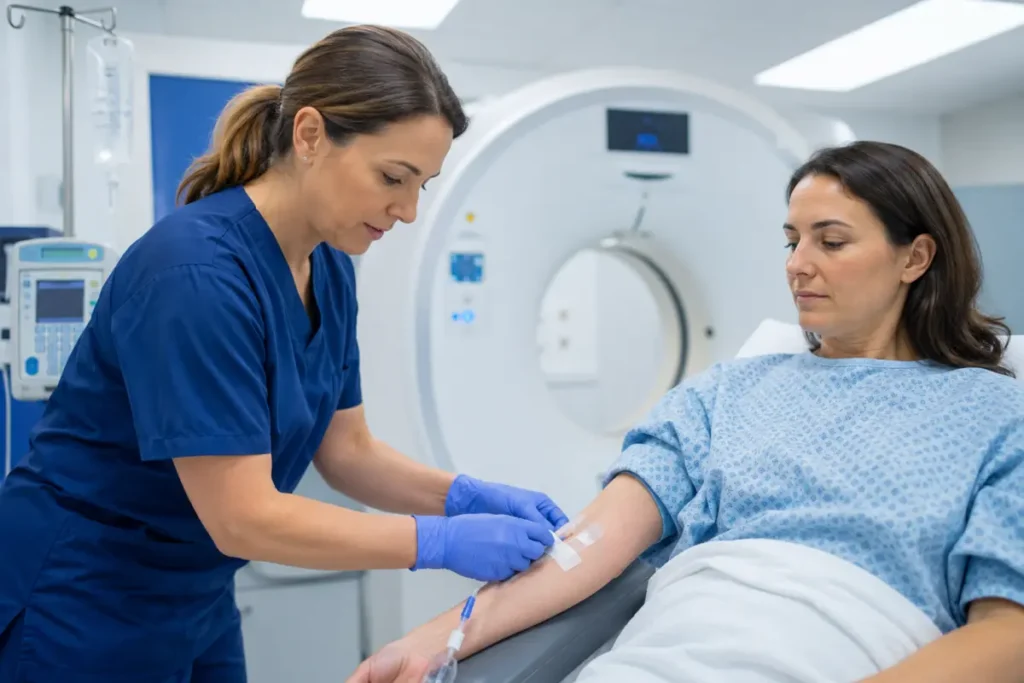
If CT is performed with contrast, a catheter is placed into a vein through which the contrast agent is injected. During contrast administration, a short-term feeling of warmth in the body or a metallic taste in the mouth may occur. These sensations usually pass quickly.
After the procedure, the radiologist analyzes the images and prepares a report. The results should be taken to the doctor who referred you for the examination.
Preparation for pelvic CT without contrast
Preparation depends on the examination protocol. In some cases, special preparation is minimal, but for high-quality visualization of the pelvic organs, the doctor or administrator may provide additional recommendations.
Usually before pelvic CT without contrast, you should:
- bring the doctor’s referral, if available;
- bring previous ultrasound, MRI, CT, test results, and discharge summaries after surgeries;
- report pregnancy or the possibility of pregnancy;
- come in clothing without metal elements in the abdomen and pelvis area;
- confirm during booking whether you need to arrive fasting;
- confirm whether the bladder needs to be filled before the procedure;
- not take laxatives or other medications on your own without a doctor’s recommendation.
If CT is prescribed to look for stones in the urinary tract, preparation may differ from preparation for CT in cases of inflammation or suspected tumor process. Therefore, it is best to follow the referral and the recommendations of the medical center during booking.
Preparation for CT scan of the pelvic organs with contrast
CT with contrast requires more careful preparation because the contrast agent is administered intravenously and eliminated through the kidneys.
Before CT with contrast, you need to:
- take a blood creatinine test;
- report kidney disease;
- report allergies to iodine or contrast agents;
- inform the staff about thyroid disease;
- report diabetes and the medications you take;
- report pregnancy or breastfeeding;
- confirm how many hours before the examination you should not eat;
- bring previous examinations and medical documents.
Do not stop regular medications on your own. If you take medications for diabetes, blood pressure, cardiovascular diseases, or have chronic kidney disease, be sure to mention this before the examination.
Are there contraindications to CT scan of the pelvic organs?
CT uses X-ray radiation, so the examination is performed based on medical indications. The main limitation is pregnancy or possible pregnancy. The procedure may also be complicated if the patient cannot remain still.
For CT with contrast, there are additional contraindications and restrictions:
- severe kidney failure;
- allergy to iodine-containing contrast;
- severe reactions to contrast in the past;
- certain thyroid diseases;
- decompensated diabetes mellitus;
- severe general condition;
- breastfeeding — requires a separate discussion with a doctor.
If you have comorbidities or doubts about the safety of contrast, it is better to mention this during booking. The medical staff will explain what information is needed before the procedure.
What does the patient receive after pelvic CT?
After a CT scan of the pelvic organs, the patient receives the examination results and a report from the radiologist. The report describes detected changes, the condition of organs and tissues in the scanned area, the presence of lesions, inflammation, enlarged lymph nodes, stones, traumatic or postoperative changes.
Important: a CT report is not a final treatment plan. With the results, you should consult the relevant specialist: gynecologist, urologist, proctologist, surgeon, oncologist, gastroenterologist, or therapist. The doctor compares the CT findings with symptoms, tests, and other examinations.
Why choose HBMedical near Shuliavka for pelvic CT?
HBMedical is a modern clinical and diagnostic center in Kyiv where you can undergo computed tomography of the pelvic organs in a convenient location near Shuliavska metro station. The center is suitable for patients who need to quickly clarify the cause of symptoms, undergo CT with or without contrast, and receive a report from a radiologist.
Advantages of HBMedical:
- convenient location near Shuliavska metro station;
- address: Kyiv, 3 O. Dovzhenka St.;
- modern Siemens CT scanner;
- pelvic CT with and without contrast;
- possibility to undergo CT of the abdominal cavity and pelvic organs;
- appointment online or by phone;
- diagnostics daily from 6:00 to 23:00;
- doctor’s report and flash drive included in the price;
- possibility to undergo additional examinations or consultations in one medical center.
The location near Shuliavka is convenient for patients from Shevchenkivskyi, Solomianskyi, Sviatoshynskyi districts, KPI, Nyvky, Lukianivka, Dorohozhychi, and other areas of Kyiv.
How to book a CT scan of the pelvic organs in Kyiv?
To book a CT scan of the pelvic organs at HBMedical, leave a request on the website or call the medical center. During booking, it is advisable to specify which examination has been prescribed: pelvic CT without contrast, pelvic CT with contrast, CT of the abdominal cavity and pelvic organs, or a comprehensive CT scan of several areas.
If you have a referral, dictate its wording to the administrator. This will help select the correct service, determine the price, and clarify preparation.
HBMedical — CT scan of pelvic organs in Kyiv
Address: Kyiv, 3 O. Dovzhenka St., Shuliavska metro station
Service: CT scan of the abdominal cavity and pelvic organs
Price: from UAH 2800
Appointment: online or by phone
Frequently asked questions about CT scans of the pelvic organs
How much does a CT scan of the pelvic organs cost in Kyiv?
In the current HBMedical price list, CT of the pelvic organs is presented as part of the CT scan of the abdominal cavity and pelvic organs service. The cost is UAH 2800 without contrast and UAH 5100 with contrast. The possibility of a separate examination of the pelvis only should be confirmed during booking.
Where can I have a pelvic CT scan near Shuliavka?
You can undergo a CT scan of the pelvic organs at the HBMedical medical center in Kyiv at 3 O. Dovzhenka St., near Shuliavska metro station.
What is included in a CT scan of the pelvic organs?
During CT, the bladder, lower parts of the ureters, rectum, lymph nodes, soft tissues of the pelvis, reproductive organs in women and men, as well as adjacent structures may be assessed depending on the examination protocol.
Which is better: pelvic CT with contrast or without contrast?
CT without contrast may be sufficient when stones, trauma, or certain structural changes are suspected. CT with contrast is more often needed to assess tumors, inflammation, lymph nodes, blood vessels, and soft tissues. The optimal option should be determined by a doctor.
Is preparation needed for a CT scan of the pelvic organs?
Yes, preparation depends on the protocol. For CT with contrast, a blood creatinine test is usually required. During booking, you should also confirm whether you need to arrive fasting, whether the bladder should be filled, and whether there are dietary restrictions.
Is a creatinine test needed before CT with contrast?
Yes, before CT with intravenous contrast enhancement, a blood creatinine test is usually required. It helps assess kidney function before administering the contrast agent.
Is a CT scan of the pelvic organs painful?
No, the scan itself is painless. The patient lies on the scanner table and must remain still. With CT with contrast, there may be brief discomfort during placement of the intravenous catheter.
How long does a pelvic CT scan take?
The computed tomography scan itself is quick, but you should allow time for registration, preparation, catheter placement if contrast is used, and receiving instructions. It is better to confirm the approximate duration during booking.
Can I have a pelvic CT scan without a referral?
It is advisable to have a doctor’s referral because it helps correctly determine the examination area and whether contrast is needed. If there is no referral, it is better to first consult a relevant specialist or clarify during booking what consultation may be needed.





Саме до таких фахівців, в разі необхідності, є бажання повернутися!
























Need specialist help?
Order a callback and our consultant will help you choose a doctor and make an appointment at a convenient time for you!