








 Work time
Diagnostics: Mon - Sun, 6:00 - 23:00
Polyclinic: Mon - Sun, 8:00 - 20:00

| SERVICE TITLE | Price, UAH |
|---|---|
| EGD (Video Esophagogastroduodenoscopy with Digital Chromoendoscopy) | 1800 |
| Video Colonoscopy with Digital Chromoendoscopy | 2350 |
| Video Rectosigmoscopy (in case of poor bowel preparation) | 1200 |
| Gastric/Intestinal Biopsy (including biopsy forceps cost) | 1000 |
| Endoscopic Forceps Polypectomy, Category I (up to 3 polyps, ≤10 mm) | 1500 |
| Endoscopic Loop Polypectomy, Category II (up to 5 lesions, ≤10 mm; includes instruments and physician’s work) | 2500 |
| Endoscopic Polypectomy, Category III (≥5 lesions or >10 mm; includes loop) | 5000 |
| Endoscopic Submucosal Dissection (ESD) for neoplasia of various sizes with suspected submucosal invasion (including instrument cost) | 50000 |
| Feeding Tube Placement (including tube cost) | 1900 |
| Endoscopic Foreign Body Removal from GI Tract – Category I | 2100 |
| Endoscopic Foreign Body Removal from GI Tract – Category II | 3000 |
| Endoscopic Hemostasis | 700 |
| Endoscopic Clip Placement (11 mm, 16 mm; including clip) | 3650 |
| Endoscopic Clip Placement (20 mm; including clip) | 4780 |
| Urease Test for <i>H. pylori</i> (cost per reagent) | 540 |
| Sedation (Category I, up to 30 min; gastroscopy only, ASA classification by anesthesiologist) | 2400 |
| Sedation (Category II, up to 60 min; gastroscopy/colonoscopy, ASA classification by anesthesiologist) | 2900 |
| EGD + Video Colonoscopy (both with Digital Chromoendoscopy) | 4150 |
| Endoscopic Injection (per site, including injection needle) | 1600 |
| Small/Large Intestine Biopsy (up to 7 samples) | 1800 |
| Gastrointestinal Biopsy Material or Polyp Resection (1 sample, 1 site) | 1560 |
| Neuroendocrine Carcinoma Verification (Immunohistochemistry) | 6000 |
| Gastric Cancer Verification (Immunohistochemistry) | 4920 |
| Excisional Biopsy / Polypectomy of Intestinal Polyps (up to 5 lesions) | 2200 |
| Laryngeal Biopsy Material | 1440 |
| Gastric Biopsy Material (Sydney system, OLGA and OLGIM staging) | 2040 |
| Excisional Skin Biopsy Material (non-melanocytic malignant tumors) | 1680 |
| Appendix or GI Diverticulum Biopsy Material (inflammatory diseases) | 1440 |
| GI Polypectomy Material (polyps ≤15 mm, up to 6 lesions, single location) | 1800 |
| Multifocal GI Biopsy Material (up to 6 samples, single location) | 1680 |
| Tumor Material from Endoscopic Mucosal/Submucosal Resection (GI tract) | 2400 |
| Cytological Examination of Endoscopic GI Material and H. pylori Detection | 1188 |
| Mucosal Resection and Endoscopic Submucosal Dissection (EMR, ESD) | 6000 |
Endoscopy — How the Examination Is Performed and What Patients Should Know
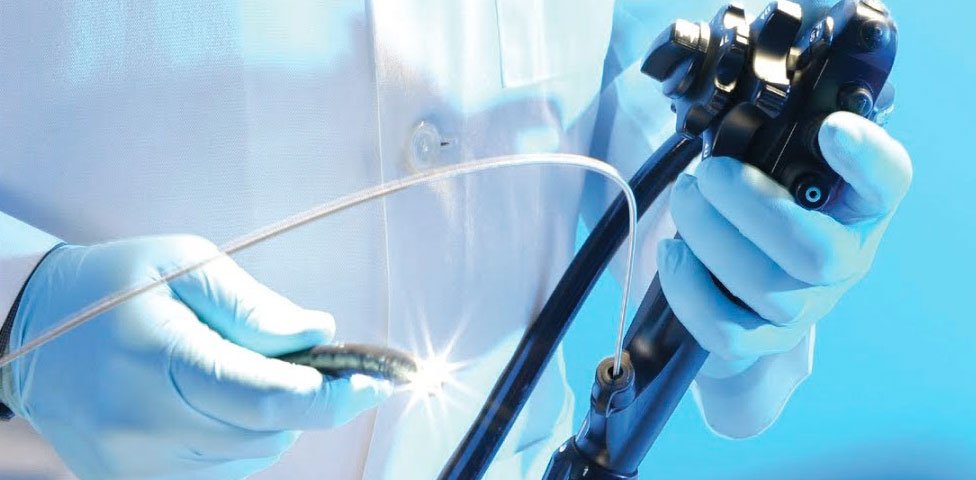
Endoscopy — is a modern diagnostic method that allows the doctor to assess the condition of internal organs using a special device — an endoscope. During the procedure, a thin flexible tube with a camera and light source is used, transmitting images to a monitor in real time.
Endoscopic examinations help detect inflammatory processes, erosions, ulcers, polyps, tumors, and other pathologies at early stages. That is why endoscopy is considered one of the most informative methods for diagnosing the gastrointestinal tract and other organs.
In this article, we will explain what endoscopy is, what types of examinations exist, when it is prescribed, and how to prepare for the procedure properly.
What Is Endoscopy?
Endoscopy — is a minimally invasive examination during which the doctor examines internal organs without the need for surgery.
The procedure is performed using an endoscope — a special device with a video camera that is inserted through the body’s natural openings.
Modern endoscopy allows doctors not only to perform diagnostics but also to carry out certain therapeutic manipulations:
- take a biopsy;
- remove polyps;
- stop bleeding;
- administer medications;
- evaluate the effectiveness of treatment.
Types of Endoscopy
Gastroscopy (EGD)
An examination of the esophagus, stomach, and duodenum. It is used to diagnose gastritis, peptic ulcer disease, reflux, polyps, and other conditions.
Colonoscopy
An endoscopic examination of the large intestine used to detect polyps, inflammatory processes, tumors, and other intestinal diseases.
Sigmoidoscopy
An examination of the rectum and sigmoid colon.
Capsule Endoscopy
A modern diagnostic method in which the patient swallows a special capsule with a camera. It passes through the digestive tract and transmits images for the doctor to analyze.
What Does Endoscopy Show?
An endoscopic examination helps detect:
- gastritis;
- peptic ulcer disease;
- polyps;
- mucosal erosions;
- inflammatory processes;
- tumors;
- bleeding;
- intestinal pathologies;
- Helicobacter pylori.
During the procedure, the doctor can immediately collect material for additional laboratory or histological tests.
When Is Endoscopy Prescribed?
A doctor may recommend endoscopy for the following symptoms:
- stomach or abdominal pain;
- heartburn;
- nausea;
- difficulty swallowing;
- blood in the stool;
- bloating;
- long-term digestive problems;
- sudden weight loss;
- anemia of unknown origin.
Endoscopy is also used for preventive monitoring in patients with chronic gastrointestinal diseases.
Is Endoscopy Painful?
Many patients worry about possible discomfort during the procedure. Modern endoscopy is performed as comfortably as possible for the patient.
Depending on the type of examination and individual characteristics, the following may be used:
- local anesthesia;
- medical sleep;
- sedation.
In many cases, endoscopy under sedation allows patients to completely avoid unpleasant sensations.
How Is Endoscopy Performed?
Before the procedure, the patient undergoes a short consultation and preparation.
During endoscopy:
- the doctor inserts the endoscope through natural openings;
- the image is transmitted to a monitor;
- the condition of the mucous membrane is assessed;
- if necessary, a biopsy or other manipulations are performed.
The duration of the procedure depends on the type of examination and usually ranges from 10 to 40 minutes.
Preparation for Endoscopy
Proper preparation directly affects the accuracy of the results.
Preparation for Gastroscopy
- do not eat for 6–8 hours before the procedure;
- do not drink alcohol;
- do not smoke before the examination;
- avoid eating a lot of fiber before the examination;
- follow the doctor’s recommendations.
Preparation for Colonoscopy
Before colonoscopy, bowel cleansing with special medications and following a diet are required.
The preparation regimen is determined individually by the doctor.
What Should Not Be Done Before Endoscopy?
- violating dietary recommendations;
- changing the preparation regimen on your own;
- hiding information about medications or chronic diseases;
- ignoring the doctor’s recommendations.
Why It Is Important Not to Delay Endoscopy
Many gastrointestinal diseases may develop for a long time without noticeable symptoms.
Timely endoscopy makes it possible to:
- detect pathologies at early stages;
- monitor the course of chronic diseases;
- start treatment in time;
- reduce the risk of serious complications.
Conclusion
Endoscopy — is a modern, accurate, and informative diagnostic method that helps detect a wide range of diseases of internal organs.
Proper preparation for the procedure and timely consultation with a doctor make it possible to obtain the most accurate result and start treatment in time.
Modern endoscopy methods make the examination more comfortable and safer for the patient.























Need specialist help?
Order a callback and our consultant will help you choose a doctor and make an appointment at a convenient time for you!