








 Work time
Diagnostics: Mon - Sun, 6:00 - 23:00
Polyclinic: Mon - Sun, 8:00 - 20:00

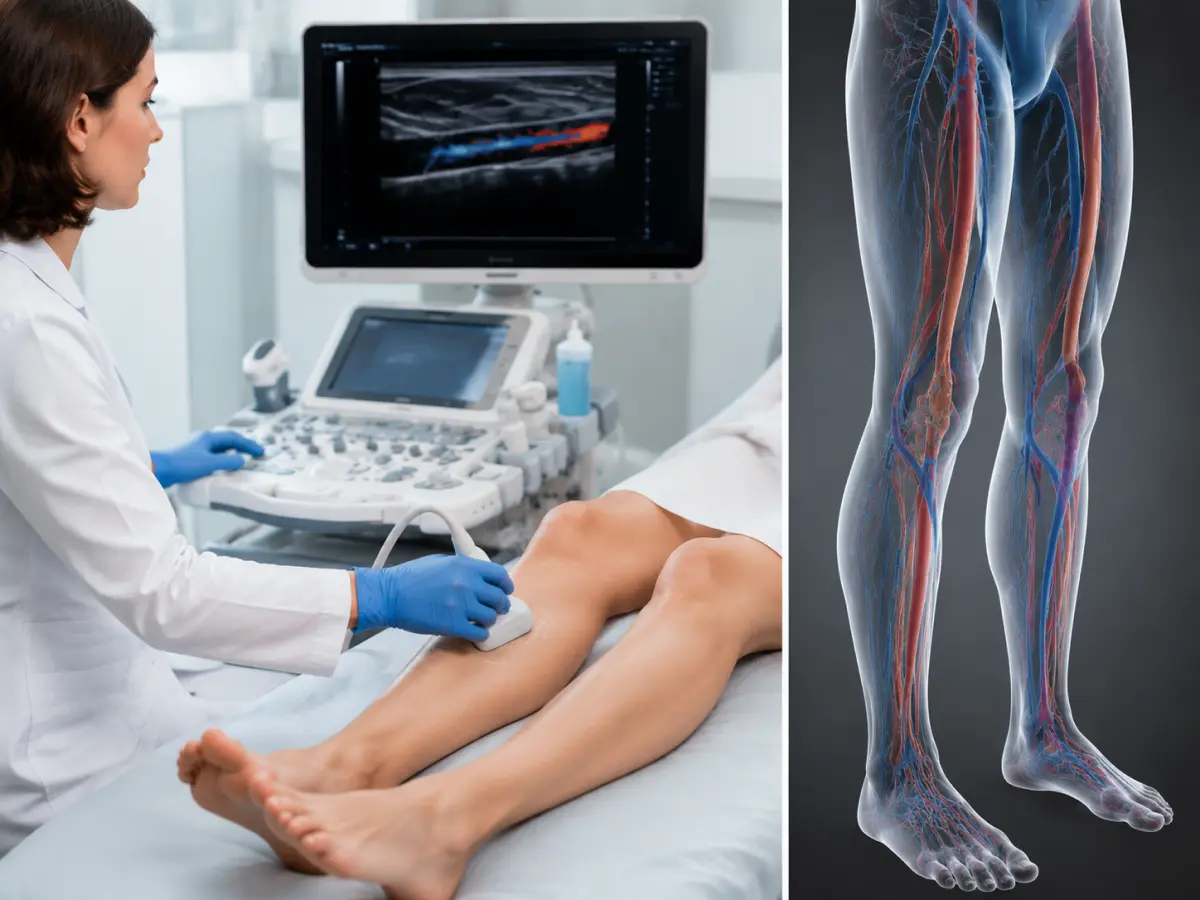
Lower limb vascular ultrasound is an ultrasound examination that helps assess the condition of the veins and arteries in the legs and the blood flow through them. Doppler ultrasound can determine the direction and speed of blood flow, detect areas of narrowing or impaired vessel patency, and assess venous outflow and other hemodynamic changes.
At the HBMedical medical center, you can get a lower limb vascular Doppler ultrasound in Kyiv — of the veins alone, the arteries alone, or a combined examination of veins and arteries.
Doppler ultrasound of the veins or arteries of the lower limbs — 1400 UAH.
Combined examination of the veins and arteries of the lower limbs — 2150 UAH.
Address: Kyiv, 3 Oleksandra Dovzhenka Street
Metro: “Shuliavska”
You can view all types of ultrasound diagnostics on the ultrasound in Kyiv page.
What Is Doppler Ultrasound of the Lower Limb Vessels
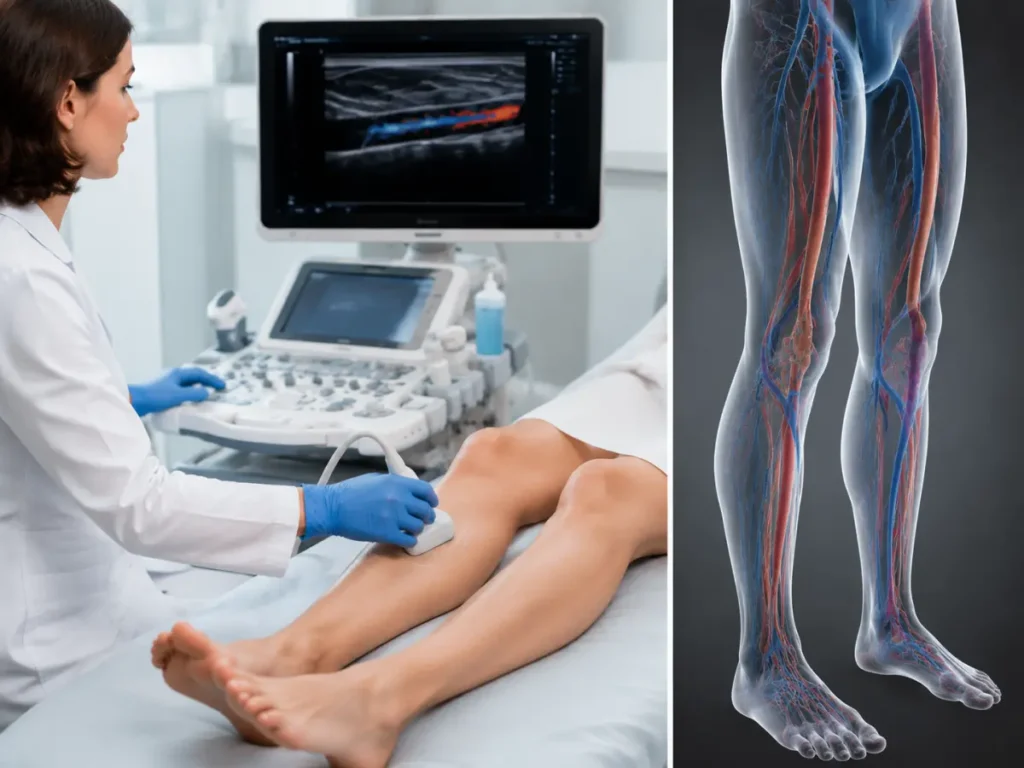
Blood vessels are examined using ultrasound with Doppler mode. A standard ultrasound image shows the anatomy of the vessel, while Doppler helps assess the movement of blood, its direction, and its speed.
In practice, you may also come across terms like “leg vessel Doppler,” “lower limb vein ultrasound,” “leg artery ultrasound,” or “vascular duplex scan.” The specific protocol depends on which part of the vascular system needs to be assessed.
HBMedical performs Doppler ultrasound of both the veins and arteries of the lower limbs.
What Lower Limb Vascular Ultrasound Shows
During the examination, the doctor assesses the anatomy of the vessels and the characteristics of blood flow.
Depending on the protocol, leg vascular ultrasound can help assess:
- the patency of the veins and arteries;
- the direction and speed of blood flow;
- the diameter and condition of the vessel lumen;
- the presence of areas of narrowing or blockage;
- venous outflow;
- the function of the venous valves;
- the presence of blood clots in the veins;
- atherosclerotic changes in the arteries;
- the degree of blood flow impairment;
- the condition of the vessels after treatment or vascular procedures.
Venous ultrasound is one of the primary imaging methods when deep vein thrombosis is suspected, while Doppler examination of the arteries helps assess narrowing and impaired arterial blood flow.
Vein or Artery Ultrasound of the Lower Limbs — Which to Choose
These are different examinations, since veins and arteries serve different functions and have different typical disorders.
Lower Limb Vein Ultrasound
A vein examination may be recommended for:
- varicose veins;
- leg swelling;
- heaviness and a feeling of fullness;
- pain or discomfort along the veins;
- the appearance of spider veins;
- changes in skin color;
- suspected thrombosis;
- the need to assess the function of the venous valves;
- planning or monitoring treatment for varicose vein disease.
During a vein examination, the doctor can assess their patency, the presence of clots, and the characteristics of venous outflow. Venous ultrasound is widely used to diagnose deep vein thrombosis.
Lower Limb Artery Ultrasound
An examination of arterial blood flow may be needed if you’re troubled by:
- pain in the calves or thighs while walking;
- legs tiring quickly under exertion;
- a feeling of cold in the feet;
- numbness;
- pallor or changes in skin color;
- wounds on the feet or lower legs that don’t heal for a long time;
- suspected narrowing or blockage of the arteries;
- atherosclerosis and other peripheral artery diseases.
Doppler ultrasound of the arteries allows the doctor to assess blood flow and detect areas where it’s impaired.
When a Combined Vein and Artery Ultrasound Is Needed
If the symptoms don’t immediately point to which part of the vascular system the problem is related to, or if the doctor needs a more complete picture of circulation, a Doppler examination of both the veins and arteries of the lower limbs may be ordered.
At HBMedical, this combined examination is a separate service.
If you have a referral, state the wording of the examination exactly as your doctor wrote it when booking.
When You Should Get a Lower Limb Vascular Ultrasound
The examination may be recommended by a family doctor, vascular surgeon, phlebologist, cardiologist, or other specialist.
Reasons to see a doctor may include:
- swelling in one or both legs;
- pain, heaviness, or a feeling of fullness;
- night cramps;
- visibly enlarged veins;
- spider veins;
- burning or tingling;
- numb feet;
- cold legs;
- calf pain while walking that eases with rest;
- changes in skin color;
- ulcers or wounds that don’t heal for a long time;
- sudden one-sided swelling or pain in a leg;
- the need for monitoring after vascular treatment.
Certain factors — diabetes, atherosclerosis, smoking, previous thrombosis, and vascular surgery — may be a reason to assess vessel condition on a doctor’s recommendation.
When Not to Delay Seeking Care
Sudden swelling of one leg, pain, redness, or a feeling of warmth can occur with deep vein thrombosis. Vein ultrasound is widely used to diagnose it.
If sudden shortness of breath, chest pain, coughing up blood, marked weakness, or loss of consciousness occurs along with these symptoms, urgent medical care is needed, since a clot from the leg veins can travel to the pulmonary arteries.
How Lower Limb Vascular Doppler Ultrasound Is Performed
The examination is performed without punctures, injections, or X-ray radiation.
The patient uncovers their legs, after which the doctor applies ultrasound gel to the skin and systematically examines the vessels with the probe.
Depending on the purpose of the examination, the doctor may perform part of it:
- lying down;
- on your back or stomach;
- standing;
- with the leg in different positions.
During a vein examination, the probe may briefly press on the vessel to assess its compressibility. Functional tests may also be used to check venous blood flow characteristics.
The image of the vessels and blood flow parameters are displayed on a monitor in real time. After the examination, the doctor prepares a report.
Do You Need to Prepare for a Leg Vessel Ultrasound
Complex preparation for a lower limb vein or artery ultrasound is usually not required. You can eat and drink before the examination unless your doctor gives other instructions. For venous leg ultrasound, the NHS also states that no special preparation is needed.
At the same time, substances that affect vascular tone and circulation can matter specifically for a Doppler examination. HBMedical notes that before certain types of vascular ultrasound, the doctor may recommend temporarily avoiding smoking or caffeine.
Before the examination, it’s a good idea to:
- choose clothing that’s easy to remove or roll up above the thigh;
- avoid applying greasy creams or ointments to your legs right before the procedure;
- bring previous vascular ultrasound results, if you have them;
- have your doctor’s referral;
- tell the doctor about any medications you take regularly.
Don’t stop prescribed medications on your own.
You can confirm the exact recommendations regarding caffeine, smoking, and other restrictions for your protocol when booking.
Lower Limb Vascular Ultrasound: Price at HBMedical
The cost depends on which vessels need to be examined — veins, arteries, or both systems — as well as whether both legs or a single limb is examined.
| Examination | Price |
| Doppler of the veins or arteries of the lower limbs | 1400 UAH |
| Doppler of the veins and arteries of the lower limbs | 2150 UAH |
| Doppler of the veins of one lower limb | 850 UAH |
| Doppler of the arteries of one lower limb | 850 UAH |
| Doppler of the veins and arteries of one lower limb | 1500 UAH |
The prices reflect HBMedical’s current online price list at the time of checking.
If your referral simply says “lower limb vascular ultrasound,” it’s worth confirming with your doctor or the administrator exactly what needs to be examined: veins, arteries, or veins and arteries together. This affects both the scope of the examination and its cost.
You can view the current price list on the HBMedical prices page.
What to Do After a Vascular Ultrasound
The ultrasound report describes the condition of the vessels and the characteristics of blood flow, but further treatment is determined based on symptoms, examination, and other data.
If the examination shows venous insufficiency, thrombosis, arterial narrowing, or other significant changes, it’s worth discussing the result with a vascular surgeon.
HBMedical has a vascular surgeon on staff who treats varicose vein disease, lower limb atherosclerosis, and arterial and venous thrombosis, and performs vascular ultrasound of the upper and lower limbs. You can book a vascular surgeon consultation at HBMedical.
If a more detailed examination of the vascular anatomy is needed to clarify the condition of the arteries, the doctor may recommend CT angiography of the lower limb vessels. Ultrasound assesses blood flow in real time, while CT angiography allows more detailed visualization of the arteries over a longer stretch; the methods do not fully replace each other.
Where to Get a Lower Limb Vascular Ultrasound in Kyiv
You can get a lower limb vascular ultrasound in Kyiv at the HBMedical medical center in Shuliavka.
Address: Kyiv, 3 Oleksandra Dovzhenka Street
Metro: “Shuliavska”
Examination: veins, arteries, or a combined vein + artery examination
HBMedical performs Doppler ultrasound of the lower limb vessels, and the center’s specialists include doctors who examine the veins and arteries of the legs.
Frequently Asked Questions
Can I get a lower limb vascular ultrasound if I have varicose veins?
Yes. Duplex vein ultrasound is one of the primary methods for assessing veins in symptomatic varicose vein disease. It helps assess venous blood flow and valve function and plan further treatment.
Can a blood clot be seen on a vein ultrasound?
Vein ultrasound is used to detect blood clots, including deep vein thrombosis of the lower limbs. The doctor assesses the vein’s patency, its compressibility, blood flow, and other ultrasound findings.
Can Doppler ultrasound be performed during pregnancy?
Ultrasound does not use ionizing radiation. If thrombosis or another circulatory problem is suspected during pregnancy, the doctor may order a vascular ultrasound.
Do I need to remove compression stockings before a vein ultrasound?
The doctor needs access to the skin of the leg for a full vein examination, so compression garments will need to be removed just before the examination itself. If you wear them continuously on your doctor’s instructions, don’t change how you use them on your own — you can confirm the details when booking.
What’s the difference between vascular ultrasound and Doppler ultrasound?
In everyday use, these terms are often used interchangeably. Doppler is an ultrasound mode that allows blood movement in the vessels to be assessed. Modern duplex examinations combine an image of the vessel itself with an assessment of blood flow. HBMedical also explains Doppler as a special ultrasound mode for determining the direction and speed of blood movement.
Which doctor should I see with the results?
For conditions of the veins and arteries of the lower limbs, the result is most often evaluated by a vascular surgeon, and for venous conditions, also by a phlebologist. A vascular surgeon consultation is available at HBMedical.
Book a Lower Limb Vascular Doppler Ultrasound at HBMedical
If you need a lower limb vascular ultrasound in Kyiv, book an examination at HBMedical near “Shuliavska” metro station.
Doppler of the veins or arteries of the lower limbs — 1400 UAH
Doppler of the veins and arteries of the lower limbs — 2150 UAH
Address: Kyiv, 3 Oleksandra Dovzhenka Street
When booking, let us know exactly what examination is indicated in your referral: veins, arteries, or veins and arteries together. This will help us select the right service and confirm its price right away.
This information is for reference only and does not replace a doctor’s consultation.





Мені все сподобалось
Всі профі
Дякую


Велика подяка лікарю Дуброву Є.О. — надзвичайно компетентний і чуйний фахівець, який детально все пояснив, розвіяв тривогу та підтримав морально. Щиро дякую анестезіологу Бєлаш О.М. за високий професіоналізм, чуйність і справжнє людське ставлення — занурення в сон та сам перебіг процедури минули максимально комфортно. Також величезне спасибі медсестрі (на жаль, не дізналася ім'я) за її турботу, доброту та увагу.
Весь персонал вразив своєю чуйністю та теплом. Дякую за ваш труд і турботу про пацієнтів! Однозначно рекомендую.













Дуже ввічливий та приємний персонал клініки. Лікар був уважний, без поспіху пройшовся по всім аспектам здоровʼя. Лабораторія швидко зробила аналізи. В цілому дуже задоволена. Радже звертатися!




Саме до таких фахівців, в разі необхідності, є бажання повернутися!

і закінчуючи отриманим описом і рекомендаціями від лікарів.
























Need specialist help?
Order a callback and our consultant will help you choose a doctor and make an appointment at a convenient time for you!