








 Work time
Diagnostics: Mon - Sun, 6:00 - 23:00
Polyclinic: Mon - Sun, 8:00 - 20:00

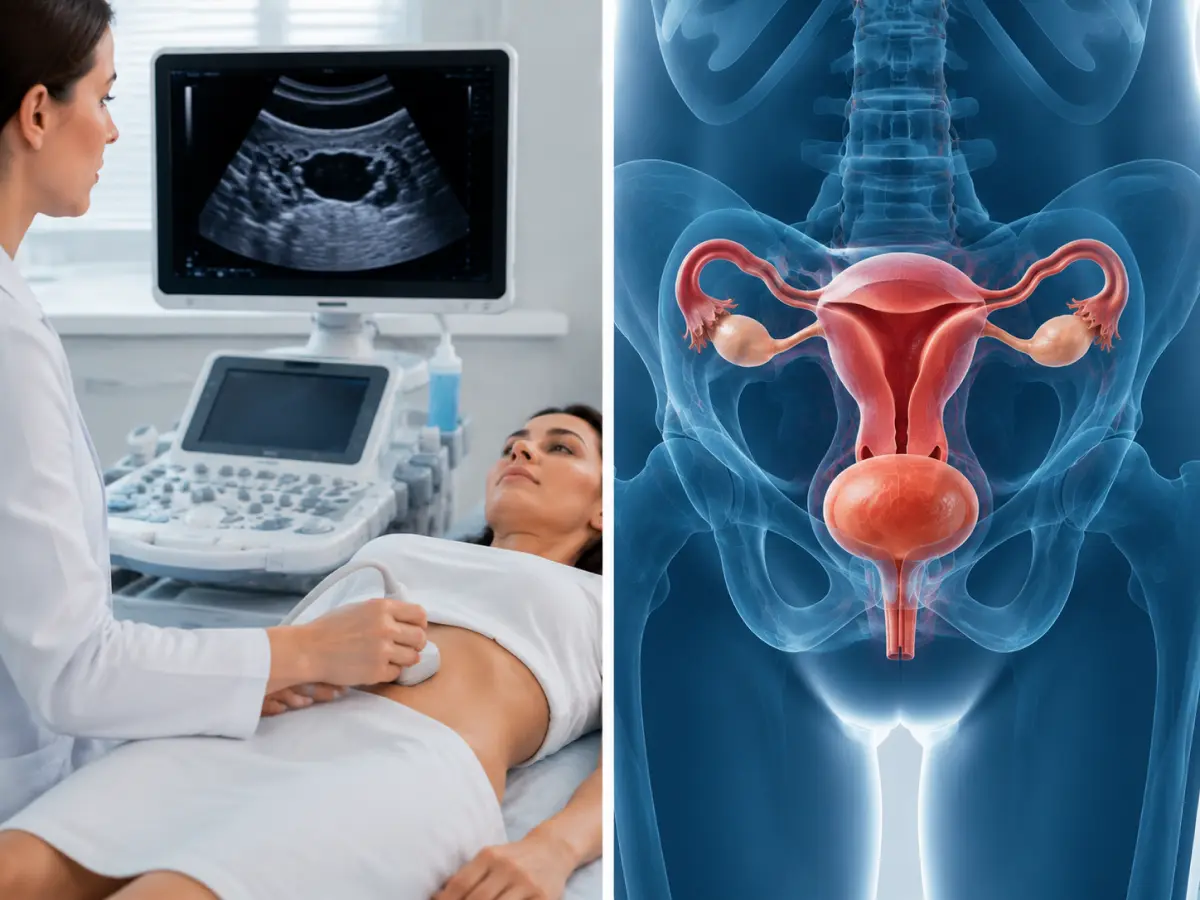
Pelvic ultrasound is an ultrasound examination that helps assess the uterus, cervix, endometrium, ovaries, and other pelvic structures. It’s used for lower abdominal pain, menstrual cycle disorders, unusual bleeding, suspected cysts, and other gynecological changes. Ultrasound does not use ionizing radiation.
You can get a pelvic ultrasound in Kyiv at the HBMedical medical center in Shuliavka. The examination is performed by prior appointment, and after the procedure the patient receives an ultrasound diagnostics doctor’s report.
Price of pelvic ultrasound — 970 UAH.
Address: Kyiv, 3 Oleksandra Dovzhenka Street
Metro: “Shuliavska”
You can view other types of examinations on the ultrasound in Kyiv page.
What’s Included in a Pelvic Ultrasound
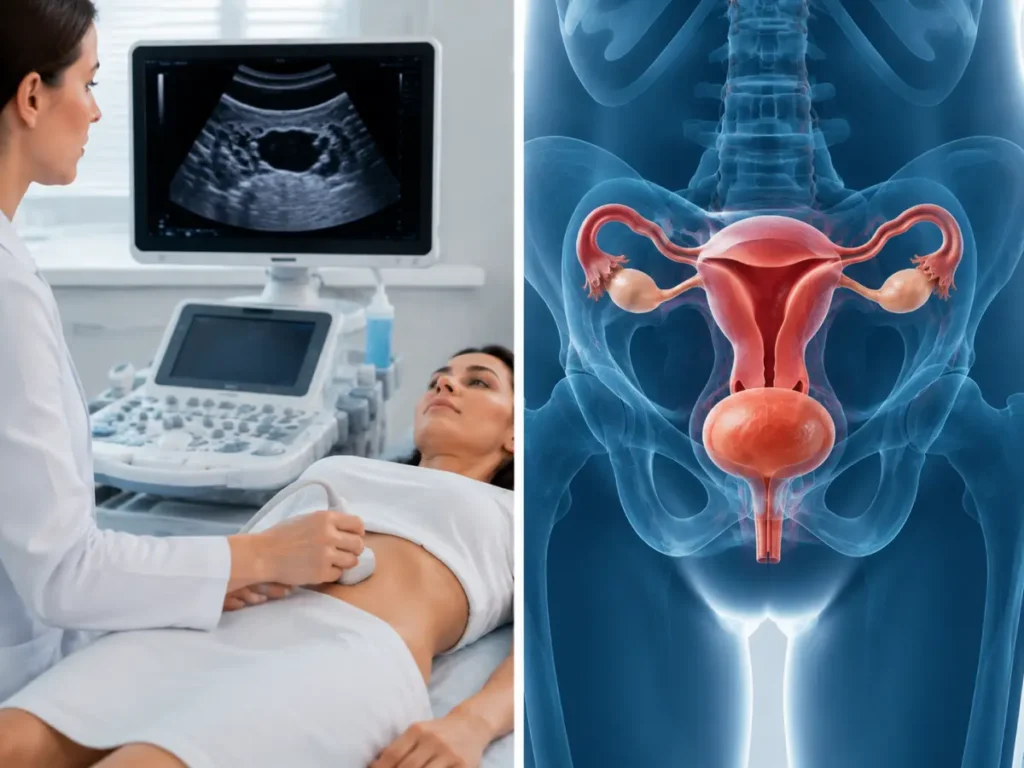
During a gynecological pelvic ultrasound, the doctor assesses the organs of the female reproductive system and their structure.
Depending on the clinical purpose, the following are examined:
- the uterus — its position, shape, size, and structure;
- the endometrium — the inner layer of the uterus;
- the cervix;
- the right and left ovaries;
- the adnexal area;
- the presence of free fluid in the pelvis;
- any cysts, nodules, or other formations found;
- where indicated — blood flow in certain structures using Doppler mode.
Ultrasound provides a real-time image of the pelvic organs, and Doppler mode can additionally be used to assess blood flow.
The bladder may be visualized during a transabdominal examination, but the necessary scope of the examination depends on the referral and the clinical purpose.
What’s Included in a Pelvic Ultrasound for Men?
In men, the pelvic organs include the prostate gland and structures of the urinary system, among others. However, HBMedical offers a separate service for this — a prostate and bladder ultrasound, priced at 970 UAH.
It’s therefore a good idea to state the exact wording from your referral when booking, so the administrator can correctly identify the examination you need.
What a Pelvic Ultrasound Shows
An ultrasound helps the doctor assess the anatomy and structural changes of the reproductive organs.
The examination may detect or clarify:
- ovarian cysts and other formations;
- fibroid nodules;
- changes in the endometrium;
- structural changes of the uterus;
- enlargement or structural changes of the ovaries;
- certain signs of inflammatory processes;
- fluid in the pelvic cavity;
- other changes that can be visualized by ultrasound.
Ultrasound is also used to clarify the causes of pelvic pain and unusual uterine bleeding, to assess a palpable mass, and as part of an infertility work-up.
At the same time, the ultrasound report is not always a final diagnosis. The result needs to be assessed together with your symptoms, examination, and other tests. If changes are found, the doctor may recommend a gynecologist’s consultation, lab tests, a repeat ultrasound, an MRI, or another diagnostic method.
At HBMedical, you can also book a gynecologist consultation.
When You Should Get a Pelvic Ultrasound
A doctor may recommend the examination when symptoms appear, to clarify the findings of a gynecological exam, or to monitor previously detected changes.
It’s worth seeing a gynecologist and discussing whether an ultrasound is needed if you have:
- pain or a feeling of pressure in the lower abdomen;
- menstrual cycle disorders;
- unusually heavy or prolonged periods;
- spotting between periods;
- bleeding after menopause;
- unusual discharge;
- suspected pelvic mass;
- difficulty conceiving;
- the need to monitor a previously detected cyst, fibroid, or other change.
Pelvic pain, bloating, unusual bleeding, a palpable mass, and an infertility work-up are among the common reasons for a pelvic ultrasound.
If you have sudden severe pain, significant bleeding, dizziness, weakness, or other sharply pronounced symptoms, don’t wait for a routine ultrasound — prompt medical evaluation is needed.
How a Pelvic Ultrasound Is Performed
A pelvic ultrasound can be performed in several ways — transabdominally or transvaginally. In women, the transabdominal and transvaginal methods are most commonly used. In certain situations, the doctor may use both in sequence, since they provide different diagnostic information.
Transabdominal Ultrasound
This examination is performed through the front of the abdominal wall.
The patient lies on her back. The doctor applies a special gel to the lower abdomen and moves an ultrasound probe over the skin. A real-time image of the pelvic organs is displayed on the monitor.
This method usually requires a full bladder, which helps create a better ultrasound “window” for viewing the pelvic organs. HBMedical also recommends having a transabdominal ultrasound with a full bladder.
Transvaginal Ultrasound
Transvaginal examination uses a special ultrasound probe that is gently inserted into the vagina. The probe is covered with a protective sleeve and gel is used.
This method allows the probe to be positioned closer to the uterus and ovaries, producing a detailed image of the pelvic organs. The transvaginal method is used only when indicated and after the procedure has been explained to the patient.
At HBMedical, transvaginal ultrasound is usually performed with an empty bladder.
Preparing for a Pelvic Ultrasound
Preparation for a pelvic ultrasound depends on how the examination is performed. The most important difference concerns whether the bladder is full.
Preparing for a Transabdominal Ultrasound
Before an examination through the abdomen, you usually need a full bladder.
To do this, drink water before the procedure and temporarily hold off on urinating. It’s worth confirming the exact amount of water and timing when booking with HBMedical, since the recommendations may depend on the scope of the examination.
Preparing for a Transvaginal Ultrasound
Before a transvaginal examination, on the other hand, the bladder usually needs to be empty. A special diet or fasting is generally not needed for a standard gynecological ultrasound, unless the doctor has also ordered another examination at the same time.
If you’re not sure which method has been ordered for you, tell the administrator the wording from your referral. They will explain how to properly prepare for your visit.
Which Day of the Cycle to Get a Pelvic Ultrasound
There’s no universal “right” day of the cycle for every type of gynecological ultrasound. The best timing depends on exactly what needs to be assessed.
For a routine examination of the uterus and ovaries, the doctor may recommend a specific phase of the menstrual cycle. If the ultrasound is being done because of acute pain, unusual bleeding, or another clinically important complaint, waiting for a specific day of the cycle may not be practical. The timing of the examination is determined by the clinical need, and in the case of abnormal bleeding, an ultrasound can be performed regardless of the cycle phase.
So for a routine ultrasound, it’s a good idea to know the first day of your last period and tell your doctor.
Does a Pelvic Ultrasound Hurt
A transabdominal examination usually doesn’t cause pain. Some mild discomfort is possible during a transvaginal ultrasound, especially if there’s already tenderness in the pelvic area. Pelvic ultrasound examinations are generally considered non-invasive or minimally invasive, depending on the method used, and do not use ionizing radiation.
If you experience pain during the procedure, let the doctor know.
Pelvic Ultrasound: Price at HBMedical
The price of a pelvic ultrasound at HBMedical is 970 UAH.
| Service | Price |
| Pelvic ultrasound | 970 UAH |
| Prostate and bladder ultrasound | 970 UAH |
| Pelvic + abdominal + urinary system ultrasound | 2150 UAH |
| Pelvic + abdominal + breast ultrasound | 2150 UAH |
The combined options can be convenient if the doctor has recommended examining several organs in one visit. HBMedical allows you to have several ultrasounds done by prior appointment.
You can view the current prices on the HBMedical prices page.
What to Do After the Ultrasound
After the examination is complete, the doctor prepares a report describing the organs and any findings. It’s worth showing the ultrasound report to the doctor who referred you for the examination, or to a gynecologist. HBMedical notes that the report is usually prepared after the procedure is finished.
If a cyst, fibroid nodule, endometrial changes, or another formation is found, the next steps depend on its characteristics, symptoms, age, and other clinical data. The doctor may recommend monitoring, a repeat ultrasound, or further examination.
A gynecologist consultation is available at HBMedical, and if a more detailed examination of soft tissue is needed to clarify the changes, you can have a pelvic MRI on your doctor’s referral.
Where to Get a Pelvic Ultrasound in Kyiv
You can get a pelvic ultrasound in Kyiv at the HBMedical medical center in Shuliavka.
Address: Kyiv, 3 Oleksandra Dovzhenka Street
Metro: “Shuliavska”
Price: 970 UAH
Booking: by phone or through the online form
The medical center is located near “Shuliavska” metro station. When booking, tell the administrator the exact name of the examination and, if you have one, the wording from your referral — this will help correctly determine the method and provide preparation instructions.
Frequently Asked Questions
Can I have a pelvic ultrasound during my period?
Yes, technically an ultrasound can be performed during menstruation. Whether it makes sense to have a routine examination during that time depends on the clinical purpose. For pain, bleeding, or other acute symptoms, the doctor may recommend the examination regardless of the day of the cycle.
Can I eat before a pelvic ultrasound?
Fasting is usually not required for a standard, stand-alone pelvic ultrasound. The main preparation depends on the method: a transabdominal examination usually requires a full bladder, while a transvaginal one requires an empty bladder. If an abdominal ultrasound is ordered at the same time, the preparation rules will be different.
Can I have a transvaginal ultrasound if I’m not sexually active?
The method of examination should be discussed with your doctor. If the transvaginal method isn’t suitable, the pelvic organs can be assessed transabdominally; the choice of method depends on the clinical purpose and your individual situation. RadiologyInfo lists transabdominal, transvaginal, and transrectal methods of pelvic ultrasound.
Can I have a pelvic ultrasound during pregnancy?
Ultrasound does not use ionizing radiation and is widely used during pregnancy. However, pregnancy examinations follow their own protocols, so if you’re confirmed or possibly pregnant, be sure to tell your doctor before the procedure.
Can I have a pelvic ultrasound and other examinations on the same day?
Yes. HBMedical offers combined ultrasound programs, including a pelvic examination together with the abdominal organs, urinary system, breasts, or thyroid gland. It’s a good idea to let us know which procedures you need when booking, since the combination affects the preparation.
Do I need a referral for a pelvic ultrasound?
If you have a referral, it’s a good idea to bring it with you. It helps the doctor understand the clinical purpose and choose the necessary scope of the examination. You can confirm with HBMedical’s administrator whether you can book without a referral.
Book a Pelvic Ultrasound at HBMedical
Need a pelvic ultrasound in Kyiv? Book an examination at HBMedical near “Shuliavska” metro station.
Pelvic ultrasound — 970 UAH
Kyiv, 3 Oleksandra Dovzhenka Street
“Shuliavska” metro station
If you have a referral or results from a previous ultrasound, bring them with you. When booking, confirm which method is planned — transabdominal or transvaginal — so you can prepare correctly.
You can book by phone or through the form on the HBMedical website.
This material is for informational purposes only and does not replace a doctor’s consultation.





Мені все сподобалось
Всі профі
Дякую


Велика подяка лікарю Дуброву Є.О. — надзвичайно компетентний і чуйний фахівець, який детально все пояснив, розвіяв тривогу та підтримав морально. Щиро дякую анестезіологу Бєлаш О.М. за високий професіоналізм, чуйність і справжнє людське ставлення — занурення в сон та сам перебіг процедури минули максимально комфортно. Також величезне спасибі медсестрі (на жаль, не дізналася ім'я) за її турботу, доброту та увагу.
Весь персонал вразив своєю чуйністю та теплом. Дякую за ваш труд і турботу про пацієнтів! Однозначно рекомендую.













Дуже ввічливий та приємний персонал клініки. Лікар був уважний, без поспіху пройшовся по всім аспектам здоровʼя. Лабораторія швидко зробила аналізи. В цілому дуже задоволена. Радже звертатися!




Саме до таких фахівців, в разі необхідності, є бажання повернутися!

і закінчуючи отриманим описом і рекомендаціями від лікарів.
























Need specialist help?
Order a callback and our consultant will help you choose a doctor and make an appointment at a convenient time for you!