








 Work time
Diagnostics: Mon - Sun, 6:00 - 23:00
Polyclinic: Mon - Sun, 8:00 - 20:00


Price

Services
What is cervical sciatica?
Cervical radiculitis is an inflammation or compression of the nerve roots in the cervical spine, which causes acute or chronic neck pain with irradiation to the shoulder, arm, shoulder blade or back of the head. The basis of development is degenerative changes in the intervertebral discs, protrusions, hernias, osteochondrosis, muscle spasm, segmental instability or the consequences of injuries.
The inflamed root loses normal conductivity: pain, impaired sensitivity, muscle weakness and movement restrictions occur. Without treatment, cervical radiculitis becomes chronic, periods of exacerbations occur more often, and symptoms affect work capacity and quality of life.

Symptoms of Cervical Radiculitis
The clinical picture depends on which nerve root is compressed. The most common symptoms:
Characteristic manifestations:
- neck pain that worsens with head movements, tilts or sharp turns;
- pain radiating to the shoulder, shoulder blade, arm, forearm or hand;
- numbness, tingling, tingling sensation in the hand;
- decreased strength in the hand or hand, weakened grip;
- tension and stiffness of the neck muscles;
- headache in the occipital area, sometimes dizziness;
- increased pain after prolonged sitting or working at a computer.
In the early stages, symptoms may be intermittent. But without treatment, they become constant,
which indicates the progression of the lesion.
Diagnosis of Cervical Sciatica
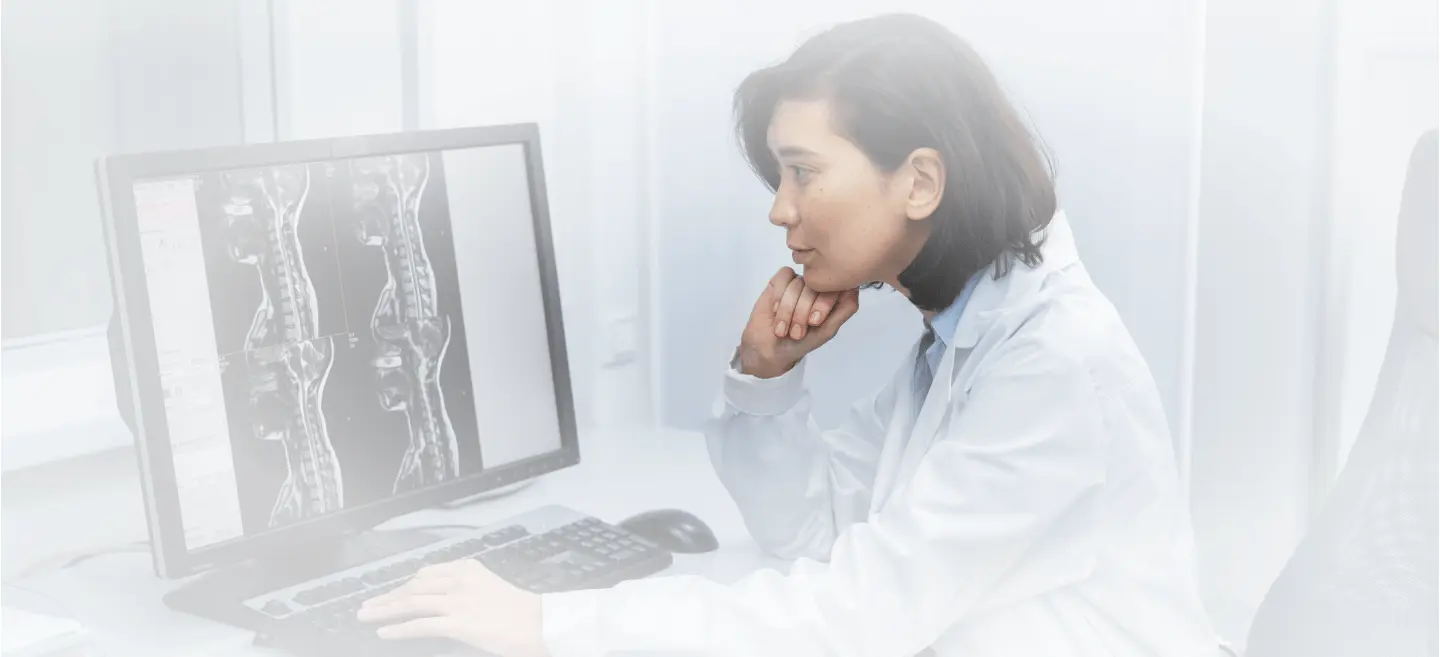
Diagnosis includes a clinical examination by a specialist at the HBMedical Spine Center, assessment of neurological symptoms and motor function.
To accurately determine the cause, the following are used:
Main examination methods:
- MRI of the cervical spine is a key method that shows protrusions, hernias, compression of nerve structures, and the condition of soft tissues;
- CT or X-rays allow you to assess bone changes, instability, and deformation;
- Myography and muscle strength testing – if necessary to assess the degree of damage to the root;
- Analysis of posture and functional limitations that can provoke sciatica.
A complete diagnosis allows you to develop a personalized therapy program aimed at eliminating the causes, not just the symptoms.

Treatment of cervical radiculitis
-
Medication.
Intended to relieve acute inflammation, swelling and pain. Anti-inflammatory drugs,
muscle relaxants, drugs to improve nerve conduction and microcirculation are used. -
Physiotherapy.
Methods that reduce spasm, improve disc nutrition and normalize the condition of the cervical spine.
Used as part of a course of treatment or during the recovery period. -
Hardware methods.
Include a back treatment device and a vertical sitting stretcher, which gently reduces compression of the nerve root,
improves mobility and reduces pain. -
Manual therapy and soft osteopathic techniques.
Used only after confirmation of safety on MRI. Aimed at eliminating functional blocks,
muscle tension, and correcting pathological biomechanics. -
Therapeutic exercises.
Individually selected exercises strengthen the cervical-scapular muscle corset, improve blood circulation,
reduce the load on the intervertebral discs. -
Taping.
Helps support muscles, reduce spasm, and relieve pain in everyday activities.
Comprehensive treatment allows for a significant reduction in symptoms, restoration of function, and prevention of relapses.
Consequences and complications of untreated cervical sciatica
- chronic pain syndrome with regular exacerbations;
- decreased strength of the arm muscles, atrophy of muscle groups;
- persistent impaired sensitivity, numbness of the fingers;
- restriction of cervical movements;
- formation of secondary headaches and impaired functioning of the shoulder girdle;
- significant decrease in working capacity and quality of life.
In the late stages, sciatica may require surgical intervention, but in most cases this can be avoided
thanks to timely and comprehensive therapy.
Would you like to make an appointment?
Leave your contact information, we will contact you and schedule a consultation.
Request a call







Дуже ввічливий та приємний персонал клініки. Лікар був уважний, без поспіху пройшовся по всім аспектам здоровʼя. Лабораторія швидко зробила аналізи. В цілому дуже задоволена. Радже звертатися!




Саме до таких фахівців, в разі необхідності, є бажання повернутися!

і закінчуючи отриманим описом і рекомендаціями від лікарів.
























Would you like to make an appointment?
Leave your contact information, we will contact you and schedule a consultation.
Request a call