








 Work time
Mon - Sun: 7:30 - 21:30

Price

Services
What is osteochondrosis of the thoracic spine?
Osteochondrosis of the thoracic spine is a degenerative process in which the intervertebral discs lose their elasticity, height, and ability to evenly distribute the load. The thoracic spine is less mobile than the cervical or lumbar spine, so symptoms often manifest not locally, but in the form of pain in the ribs, chest, or between the shoulder blades.
The gradual thinning of the discs leads to the convergence of the vertebrae, muscle strain, the formation of osteophytes, and irritation of the nerve roots. Without treatment, this process can progress, affecting the respiratory system, muscle corset, and overall mobility of the chest.

Symptoms of thoracic osteochondrosis
The clinical picture often resembles heart or gastroenterological diseases, which makes self-diagnosis difficult. The most common symptoms:
Characteristic manifestations:
- pain in the center of the back or between the shoulder blades, which increases when bending, turning or sitting for a long time;
- a feeling of chest compression, difficulty taking a deep breath;
- pain along the ribs, sometimes with irradiation into the chest or front surface of the torso;
- stiffness of movements in the chest, increased discomfort in the evening;
- numbness or tingling in the chest area when the nerve roots are compressed;
- muscle overstrain, a feeling of “wedding ring” tightness.
Symptoms of osteochondrosis of the thoracic spine often manifest themselves in a wave-like manner – periods of improvement are replaced by episodes of exacerbation.
Causes of osteochondrosis
Osteochondrosis develops gradually. The main factors of development:
The main causes:
- prolonged sitting in one position, insufficient physical activity;
- impaired posture, kyphotic deformity, scoliosis;
- weakness of the back stabilizer muscles;
- injuries to the thoracic region or excessive static loads;
- age-related changes and decreased metabolic processes in the discs;
- impaired blood circulation in the paravertebral structures.
The risk increases significantly in people who work at a computer, spend a lot of time in a driver’s seat, or regularly lift weights using incorrect technique.
Diagnosis of thoracic osteochondrosis
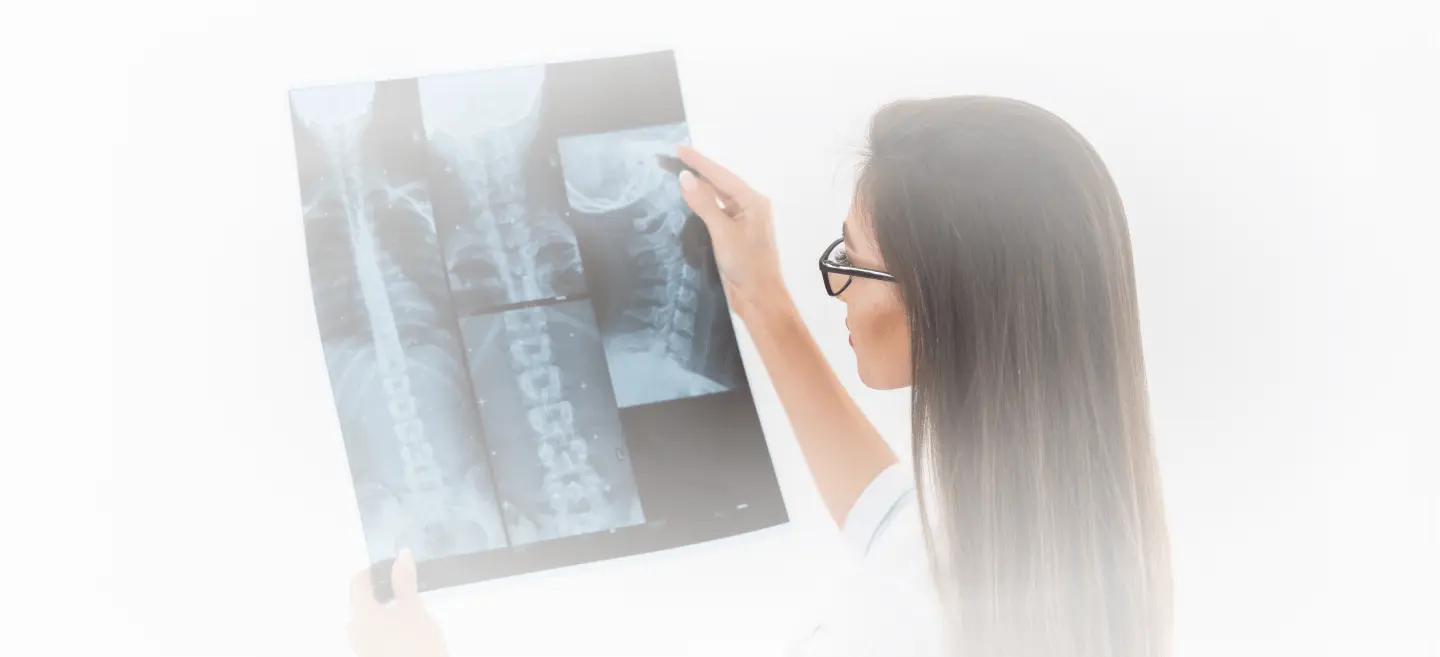
Diagnosis begins with an analysis of complaints, assessment of posture, range of motion, and palpation of paravertebral muscles.
To clarify the extent of damage, the following are used:
Main examination methods:
- X-ray of the chest – assessment of the height of the discs, osteophytes, and deformities;
- MRI – a key method for detecting protrusions, damage to nerve roots and soft structures;
- CT – detailed visualization of bone elements in complex cases;
- differential diagnostics with cardiological and gastroenterological conditions.
A comprehensive approach allows you to accurately determine the stage of the process and select the optimal therapy.

Treatment methods for osteochondrosis of the thoracic spine
Treatment is aimed at eliminating pain, reducing muscle spasm, restoring mobility and preventing the progression of
degenerative changes. At the Spine Center, HBMedical clinics work with the patient comprehensively.
Main areas of treatment:
-
Drug therapy.
Anti-inflammatory drugs, muscle relaxants, drugs to improve trophism and microcirculation are used.
The goal is to relieve acute pain and stabilize the condition. -
Physiotherapy procedures.
Methods aimed at reducing inflammation, improving tissue metabolism, and restoring mobility of thoracic segments. -
Therapeutic gymnastics.
A specially selected set of exercises for stretching the interscapular zone, correcting posture
and strengthening deep stabilizer muscles. -
Massage and soft manual techniques.
Allow to reduce muscle spasm, improve mobility and reduce the load on the discs.
Performed only after diagnosis. -
Stretching method (traction therapy).
Dosed unloading of the thoracic and upper lumbar regions, which reduces pressure on the discs and nerve structures. -
Lifestyle correction.
Recommendations on working posture, household activity, sleep organization, selection of orthopedic accessories. -
Surgical treatment.
The need arises rarely and only in the case of significant structural changes or severe nerve compression.
Would you like to make an appointment?
Leave your contact information, we will contact you and schedule a consultation.
Request a call

















Would you like to make an appointment?
Leave your contact information, we will contact you and schedule a consultation.
Request a call