








 Work time
Diagnostics: Mon - Sun, 6:00 - 23:00
Polyclinic: Mon - Sun, 8:00 - 20:00

Price

Services
What is scoliosis?
Scoliosis is a persistent lateral curvature of the spine, which changes not only the shape of the spinal column, but also the position of the shoulders, chest, pelvis and muscle balance. Unlike temporary asymmetry, scoliosis is structural in nature: the vertebrae gradually rotate around their axis, forming curvature arcs of varying magnitude. Over time, these changes affect posture, the functioning of internal organs and the general standard of living.
The disease can develop in childhood, adolescence and adulthood. In adolescents, scoliosis often progresses due to rapid growth of the skeletal system. In adults, it manifests itself against the background of degenerative changes, weakness of the muscular corset or the consequences of injuries. Timely intervention makes it possible to stabilize the process and stop the development of the deformity.

Causes of Scoliosis
Scoliosis is multifactorial in nature. Most often, its development is associated with a combination of anatomical, muscular and functional disorders.
Main causes:
- congenital anomalies of the vertebrae or ribs;
- asymmetrical development of the muscles of the back and chest;
- prolonged incorrect sitting, weak muscle corset;
- difference in the length of the lower limbs;
- consequences of injuries, operations, and previous diseases;
- degenerative changes in adulthood;
- intensive growth in adolescents without adequate muscle stabilization.
In a significant number of cases, the cause cannot be determined – such scoliosis is called idiopathic.
It is the most common and requires a systematic assessment of the patient’s condition and dynamic control.
Types and degrees of scoliosis
Scoliosis is classified by the shape of the curvature, the number of arches, and the size of the Cobb angle.
By the shape of the arch:
- C-shaped – one arch of curvature;
- S-shaped – two arches;
- Z-shaped – complex deformities with three arches.
By the degree of curvature:
- 1st degree – up to 10°;
- 2nd degree – 11–25°;
- 3rd degree – 26–40°;
- 4th degree – over 40°.
The higher the degree, the greater the risk of progression, disruption of the lungs, heart, muscles and internal organs.
Symptoms of scoliosis
Scoliosis can manifest itself in different ways, depending on the degree of curvature and the patient’s age.
Typical signs:
- asymmetry of the shoulders, shoulder blades, waist;
- tilt of the body to one side;
- different height of the iliac crests;
- protrusion of the ribs or shoulder blade (costal hump);
- rapid fatigue of the back muscles;
- pain in the back, between the shoulder blades, in the lower back;
- impaired posture, feeling of stiffness;
- decreased breathing volume with pronounced curvature.
In children, scoliosis often does not cause pain, so it is easy to miss.
In adults, pain syndrome due to muscle overload and degenerative disc changes is more common.
Diagnosis of scoliosis
Diagnostics is carried out comprehensively and includes:
Main examination methods:
- clinical examination by an orthopedist or rehabilitation specialist;
- assessment of posture and body asymmetry;
- radiography in two projections to determine the angle of curvature;
- MRI if complications or concomitant degenerative processes are suspected;
- analysis of muscle condition and functional tests.
For patients of the Spine Center of the HBMedical clinic, diagnostics includes an assessment of the risk of progression
and the development of an individual treatment plan.
Scoliosis Treatment
Treatment tactics depend on age, degree of curvature, presence of pain and functional limitations.
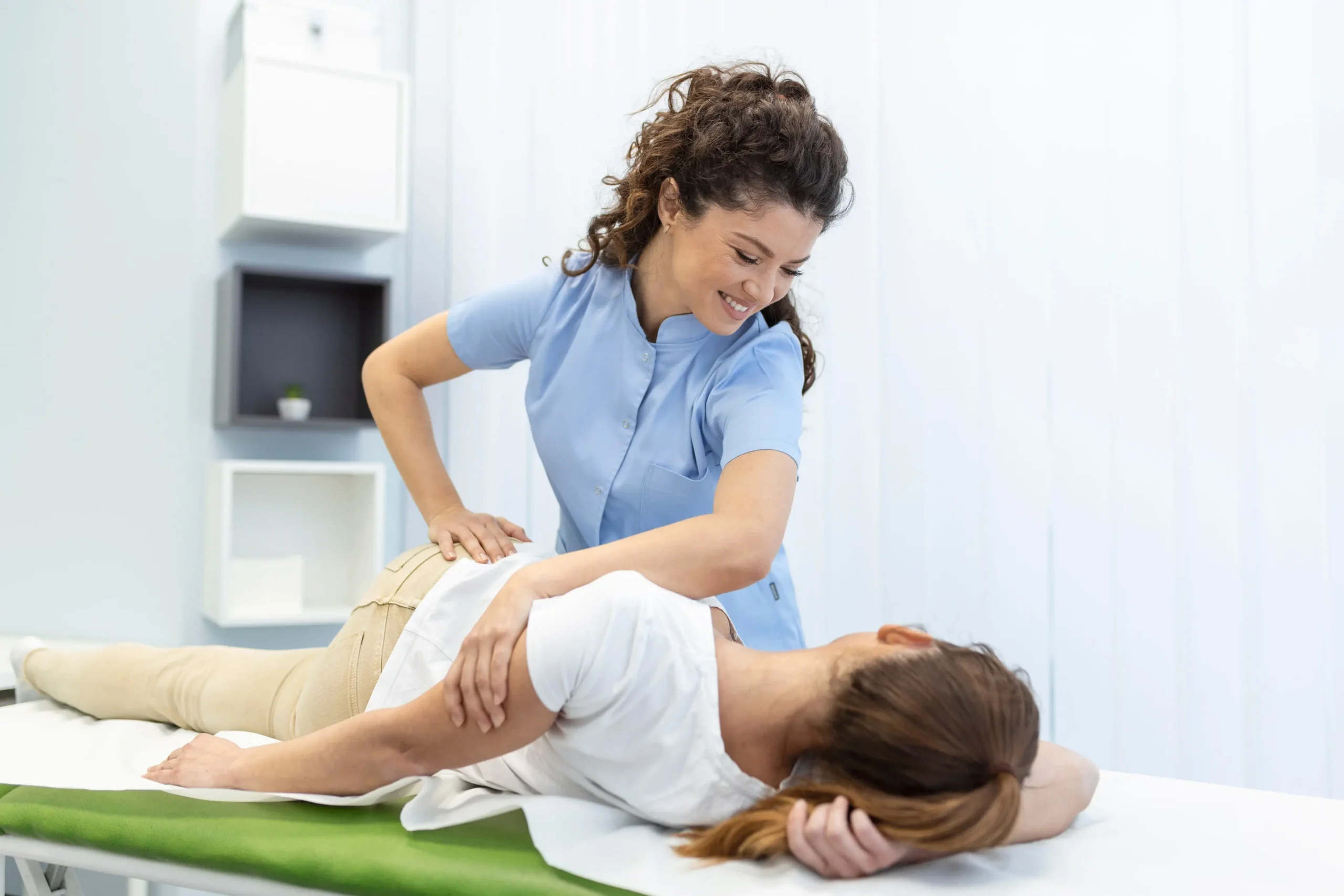
In most cases, a non-surgical approach is used, aimed at stabilizing the spine, correcting muscle imbalances and improving posture.
Main areas of treatment:
- individual treatment programs of exercises to strengthen deep muscles;
- work on the symmetry of the muscle corset and correction of the function of the shoulder and pelvic girdle;
- physiotherapy methods to reduce pain and muscle spasm;
- correction of sedentary work and household loads;
- manual and myofascial techniques (according to indications);
- work with respiratory functions in rib deformities;
- prophylaxis of progression in adolescents.
In case of high degrees of curvature, consultation with a spinal surgeon may be considered,
but timely therapy allows avoiding surgery in a significant part of patients.
Consequences and complications of scoliosis
- chronic back pain and muscle fatigue;
- progressive deformation of the chest;
- impaired lung and cardiovascular function;
- decreased endurance and performance;
- pelvic asymmetry and gait disturbance;
- secondary degenerative changes in the intervertebral discs.
Timely intervention allows you to stabilize the curvature, reduce the risk of complications and return the patient to a full quality of life.
Would you like to make an appointment?
Leave your contact information, we will contact you and schedule a consultation.
Request a call







Дуже ввічливий та приємний персонал клініки. Лікар був уважний, без поспіху пройшовся по всім аспектам здоровʼя. Лабораторія швидко зробила аналізи. В цілому дуже задоволена. Радже звертатися!




Саме до таких фахівців, в разі необхідності, є бажання повернутися!

і закінчуючи отриманим описом і рекомендаціями від лікарів.






















Would you like to make an appointment?
Leave your contact information, we will contact you and schedule a consultation.
Request a call