








 Work time
Mon - Sun: 7:30 - 21:30

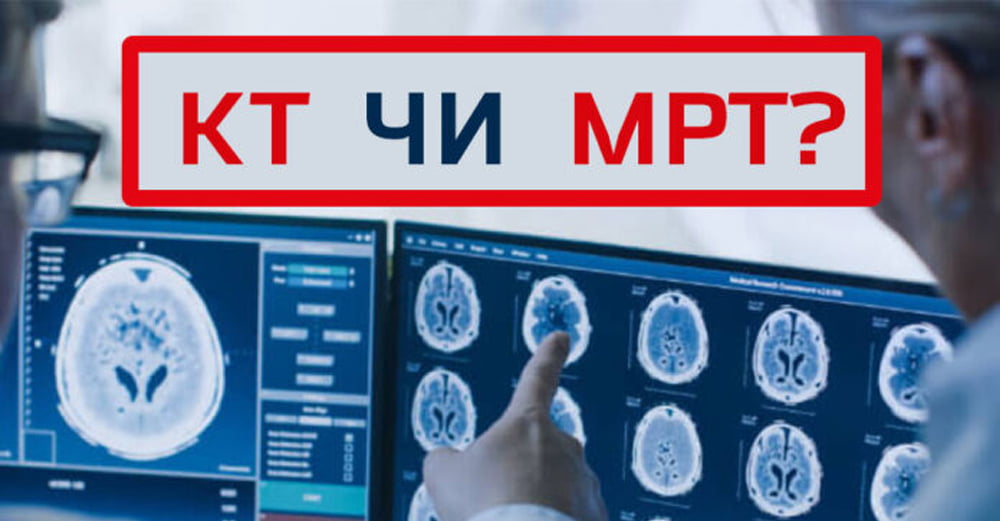
What is the difference between computed tomography and MRI? MRI and CT are completely different studies, except, in fact, for the very principle of tomography. Tomography is a layer-by-layer study of the patient’s anatomical zones with subsequent imaging of the object.
To make it easier for you to understand and not get confused in numerous technical characteristics and medical terms, we have combined the main data into a table.
 |  |
| MRI | CT |
|---|---|
| The principle of action | |
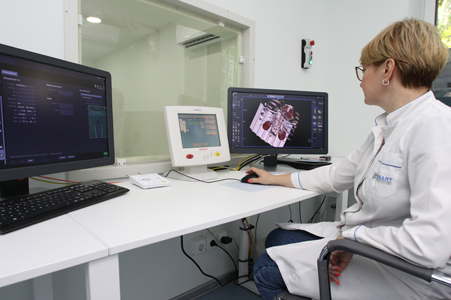
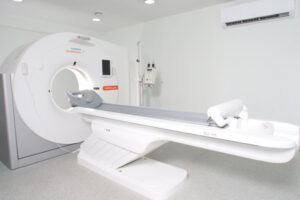
| Magnetic resonance imaging obtains images without the use of X-rays. Contrary to popular belief, the patient does not receive a dose of radiation. The tomograph sends an electromagnetic pulse passing perpendicular to the magnetic field, the hydrogen atoms contained in the human body send a corresponding signal, which is captured by the device and transmits an image. | Computed tomography uses X-rays to obtain an image, but the radiation dose is minimal and safe for humans. The device is capable of scanning at different angles, thanks to the possibility of circular rotation around the entire patient’s body. The resulting images are subsequently processed by a computer program. |
| Research time | |
| From 15 minutes to 2.5 hours | From a few seconds to 30 minutes |
| Preparation for research | |
| The necessary procedures should be followed before the examination | No special training is required |
| Advantages | |
|
|
| Indication | |
|
|
| Absolute contraindications | |
|
|

Valera K.
10:40 16 Mar 26

EnjoyYourLife
15:05 14 Mar 26

Mariia H.
15:03 14 Mar 26
Проходила МРТ коліна.Дівчата на рецепції все розказали, мене провели в кабінет, процедура була максимально комфортною,дякую!

Тонконог В.
12:17 14 Mar 26

Mehin M.
11:47 14 Mar 26
Класний сервіс! Чудові дівчата на рецепції. Дуже кваліфікований персонал !

Анна
10:36 07 Feb 26
Проходив МРТ у центрі — без черг, уважний персонал, усе пояснюють. За потреби надають беруші, що робить процедуру комфортнішою. Результат обіцяють на наступний день.

Nadiia K.
13:49 05 Feb 26
Сервіс сподобався. Все швидко та чітко. Дівчата на адміністрації ввічливі, все пояснили. Саме мрт дослідження пройшло без проблем! Залишилась задоволена, буду й надалі користуватися послугами клініки. У клініці чисто та дуже гарний ремонт))

Яна Л.
14:31 13 Dec 25
Дуже вдячна клініці звертаємось не перший раз, записатись можна швидко, швидко отримати результат. Приємні дівчата на рецепції. Чудовий сервіс. Доступні ціни

Eka S.
07:52 21 Oct 25
Дуже приємна клініка. Привітний персонал. Дуже була приємно вражена як дівчата на рецепції кожному все детально пояснюють. Сервіс на вищому рівні.

Елена С.
16:05 23 Oct 24
Обслуговування на висоті, все швидко та професійно. Рекомендую💙💛

Zuluink
14:49 23 Oct 24
Якісне обслуговування

Alex B.
14:45 23 Oct 24
Був у цій клініці місяць тому у лікаря Яркового ВВ. Хочу подякувати лікарю за його професійну роботу і також адміністраторам на ресепшені, дуже привітні та дбайливі. З усім допомогли та все пояснили. Спасибі ще раз, відвідуватиму клініку повторно і всім рекомендуватиму!)

Таня К.
12:53 23 Oct 24
Класна клініка, обслуговування на найвищому рівні. Дякуємо персоналу за швидкість, уважність та людяне ставлення.

Людмила К.
12:49 23 Oct 24
Перший раз у цій клініці все сподобалося, привітний персонал. Дякую за допомогу

Ольга П.
17:19 17 Oct 24
Доброго вечора, панство! Хочу подякувати адміністратору центра..і тут починається саме цікаве.Як часто ,Ви, як пацієнти,запам'ятовуєте ім'я адміністратора,який(, чи яка) є зв'язковим між нами, пацієнтами, та лікарями???Ось і я потрапила у таку незручну ситуацію. Але,я гадаю,що Пані згадає пацієнтку,яка годину не давала спокою.Це було 16.10. Ви були дуже чуйною,терпляче мене вислуховували,заспокоївали,вирішували . Не сказали- приходьте завтра,спробуємо...ні Ви мені допомогли. Я дуже вдячна Вам!!! Ще хочу подякувати лікарю- рентгенологу,яка була" втягнута" в цей процесс..Щіро дякую,Вам!!!Бажаю здоров'я, та благодарних пацієнтів.Слава Україні!!!

Катерина П.
10:48 13 Oct 24
Приємний персонал, чистота, доступність та зручності (є кавовий апарат, вода, мʼякий диван в зоні очікування). Робила мрт вперше, все пояснили, показали. Результати прийшли за декілька годин.

Оксана Ч.
10:37 10 Oct 24
У цьому медичному центрі надзвичайно доброзичливий, привітний персонал, лікарі уважні, високопрофесійні, дуже вдячна за якісне обстеження і позитивні емоції. Усім бажаю здоров'я.

Nina R.
11:34 07 Sep 23
Дуже сподобалася клініка та сервіс обслуговування! Дуже кваліфікований та привітний персонал. Обстеження було якісне, результат отримала швидко. Зручне розташування клініки. Обовʼязково буду радити всім вашу клініку! З повагою

Кора К.
11:34 07 Sep 23
Гарний центр. Всім рекомендую!

Елена П.
20:27 31 Jul 23
Рівень медичного центру - відмінний. Була у різних спеціалістів - невролога, терапевта, гінеколога - все супер. Дуже раджу якщо у вас стоїть вибір між різними медичними центрами.

Наталья П.
12:11 31 Jul 23
Проходили в цьому медичному центрі повне обстеження. І аналізи, і КТ, також лікування нам призначав лікаря. Якість, обслуговування на високому рівні! Так зручно, що все можна пройти швидко, комфортно за доступну ціну і все в одному місці, не потрібно ніде їздити. Рекомендую Hbmedical!

Диана Ш.
15:23 28 Jul 23
Робила контрастне МРТ. Задоволена сервісом і якістю роботи. Описали швидко. Результати також приходять на пошту.Пояснюють кожен крок, ін’єкції роблять не боляче. Надягають навушники від шуму.В самому томографі циркулює свіже повітря,Комфортно все. Рекомендую!
Need specialist help?
Order a callback and our consultant will help you choose a doctor and make an appointment at a convenient time for you!